Types of Hydrotherapy in Physiotherapy: Methods, Benefits and Which One You Need
Hydrotherapy is more than soaking in warm water. Here are the main types physiotherapists use, which condition each one suits, who should avoid it, and what you can safely do at home.
Water has been used to soothe pain for thousands of years, but modern physiotherapy has turned it into a precise clinical tool. If you have searched for the types of hydrotherapy in physiotherapy, you have probably noticed that most pages give you a long list of names and stop there. They rarely tell you which type suits which problem, how warm the water should be, who should avoid it, or what you can safely do at home.
This guide fills those gaps. You will learn how hydrotherapy works, the main types used by physiotherapists, what research says about their effectiveness, how to match a method to your condition, and how water-based care can be built into home physiotherapy in Bangalore.
Key Takeaways
- Hydrotherapy in physiotherapy means using water, at controlled temperatures and depths, to reduce pain, ease movement and rebuild strength.
- The main types fall into three groups: pool-based aquatic exercise, thermal water treatments (warm, cold and contrast), and jet or bath-based methods such as hydro massage and sitz baths.
- A Cochrane review of 13 trials found that aquatic exercise gives a small but meaningful short-term benefit for pain, disability and quality of life in knee and hip osteoarthritis, with no serious side effects reported.
- Active exercise in water works better than simply soaking, so the type of hydrotherapy matters.
- Hydrotherapy is not suitable for everyone. Fever, open wounds, unstable heart conditions and reduced skin sensation all need medical clearance first.
What Is Hydrotherapy in Physiotherapy?
Hydrotherapy is the therapeutic use of water to treat injury, pain and loss of function. In physiotherapy it is delivered by a trained therapist who selects the water temperature, depth, movement and duration to match your diagnosis and stage of recovery.
You will often see three related terms:
- Hydrotherapy: the broad term covering every treatment that uses water, from passive floating to active exercise, and from warm baths to cold immersion.
- Aquatic therapy (aquatic physiotherapy): the active, exercise-based branch, usually done in a warm pool under supervision.
- Balneotherapy: bathing in mineral or spa water, which is more a wellness approach than a rehabilitation programme.
This distinction matters because research shows that passive immersion, such as relaxing in a hot tub, does not produce the same benefits as active exercise performed in water. The best outcomes come from guided movement, not just soaking.
How Water Helps the Body: The Science in Plain Language
A 2024 review of aquatic therapy in physiotherapy describes four physical properties that make water therapeutic:
- Buoyancy: water pushes upward against gravity, so a joint carries far less load. Standing in water at waist level takes roughly half your body weight off your legs, and chest-deep immersion reduces it much further. This is why a person who struggles to walk on land can often walk in a pool.
- Hydrostatic pressure: water presses evenly on every part of the submerged body. This helps limit swelling and supports circulation, and it also gently challenges breathing and the heart, which is why screening matters.
- Viscosity and resistance: water is much denser than air, so every movement meets smooth, adjustable resistance. Moving faster or using larger surfaces increases the challenge, which allows strengthening without heavy weights.
- Thermal effect: warm water relaxes muscle, eases stiffness and makes movement more comfortable, while cold water reduces swelling and dulls pain after acute injury.
Together, these properties let a therapist start rehabilitation earlier and with less pain than land exercise permits.
Types of Hydrotherapy in Physiotherapy at a Glance
Pool-based aquatic exercise methods
- General aquatic exercise
- Bad Ragaz Ring Method
- Halliwick Concept
- Ai Chi
- Watsu
- Underwater treadmill and deep-water running
Thermal water treatments
- Warm water immersion and whirlpool
- Cold water immersion and cold compress
- Contrast bath therapy
Bath and jet-based methods
- Sitz bath
- Hydro massage and underwater jets
- Shower therapies (including the contrast shower)
- Steam and sauna baths
- Mineral baths and thalassotherapy
The sections below explain each one, including who it suits.
Group 1: Pool-Based Aquatic Exercise
Physiotherapy pools are usually heated to between about 28 and 36 degrees Celsius, warmer than a standard swimming pool. You do not need to know how to swim.
General Aquatic Exercise
This is the most common form. A therapist guides you through walking, marching, leg swings, squats, stretching and strengthening in chest-deep water. It is widely used for osteoarthritis, back pain, post-surgical rehabilitation and general deconditioning. Aquatic work is also one of the types of aerobic training in physiotherapy used to rebuild stamina. Our guide to physiotherapy for osteoarthritis shows how land and water work fit together.
Bad Ragaz Ring Method
Often described as an aquatic version of proprioceptive neuromuscular facilitation (PNF), this technique has you float on your back or front, supported by rings or floats at the neck, hips and ankles, while the therapist provides resistance. It progresses from passive to active, isometric to dynamic work, and suits patients with weakness, spinal problems and neurological conditions.
Halliwick Concept
Halliwick began as a way to teach swimming to people with disabilities and is now used as a therapy approach built around balance control, rotation control and breathing. Research on Halliwick therapy in subacute stroke has examined its effect on functional mobility. It is helpful in neurological rehabilitation and for children. See our guide to hemiplegia treatment and physiotherapy exercise for how rehabilitation progresses after stroke.
Ai Chi
Ai Chi combines deep breathing with slow, flowing movements performed in shoulder-deep water, similar to Tai Chi. It targets balance, relaxation and coordination and is often used for older adults, people with Parkinson's disease and those with chronic pain or anxiety.
Watsu
Watsu is a passive technique in which the therapist cradles and gently moves the person through warm water, combining stretching with elements of shiatsu. It promotes deep relaxation and is mainly used for chronic pain, stiffness and stress. It is passive, so it complements rather than replaces active exercise.
Underwater Treadmill and Deep-Water Running
An underwater treadmill allows gait retraining with adjustable water depth to control how much weight goes through the legs. Deep-water running keeps you fully supported and is popular with athletes who need to keep fitness while an injury heals. Our sports physiotherapy service uses the same load-management principles on land.
Group 2: Thermal Water Treatments
Warm Water Immersion and Whirlpool
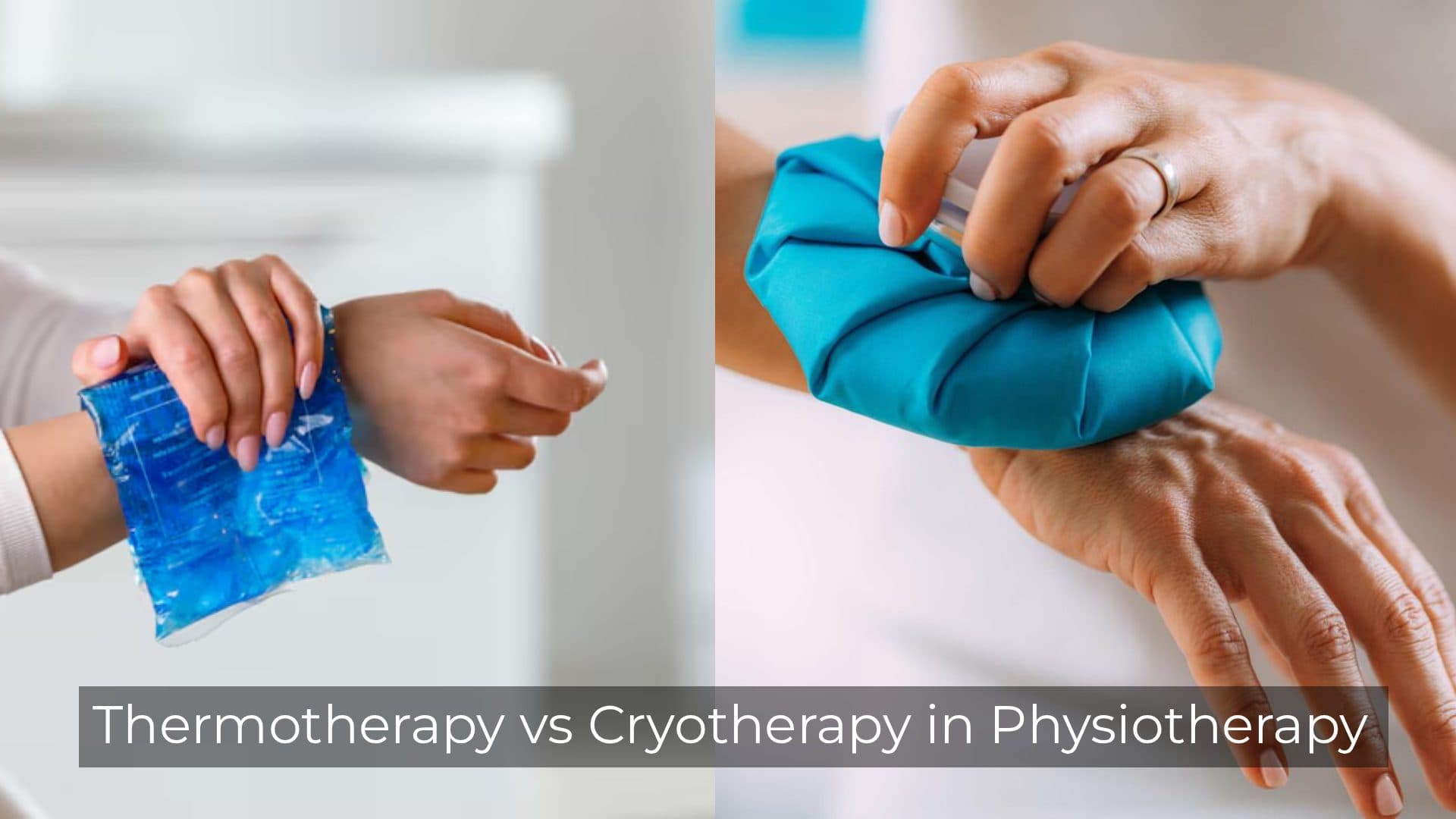
Soaking a limb or the whole body in warm water increases local blood flow, relaxes muscle and eases stiffness before exercise. A whirlpool adds turbulence for a mild massage effect. It is often used for chronic joint stiffness, subacute muscle tightness and before stretching. It is not for fresh, swollen injuries, where heat can increase swelling. To understand when heat or cold is the right choice, read our comparison of thermotherapy vs cryotherapy in physiotherapy.
Cold Water Immersion and Cold Compress
Cold immersion or an ice-water compress is used in the first stage after an acute sprain, strain or post-exercise soreness to reduce swelling and pain. It is applied for short periods with a protective barrier on the skin, because prolonged exposure can damage tissue. Cold is avoided in people with poor circulation, Raynaud's disease or reduced sensation.
Contrast Bath Therapy
Contrast therapy alternates warm and cold water, for example by moving the hand or foot between two basins. The idea is to stimulate circulation through repeated expansion and narrowing of blood vessels. It is commonly used for hands, wrists, ankles and feet after injury or immobilisation. Honest note: evidence for contrast baths is still limited, so therapists use them as a supportive option rather than a core treatment.
Group 3: Bath and Jet-Based Methods
Sitz Bath
A sitz bath involves sitting in a shallow tub of warm water covering the hips and buttocks. It is used to soothe pain and muscle spasm in the pelvic floor, perineum and lower rectum area, such as after childbirth or in certain anorectal conditions. It is simple, low-cost and can be done under guidance at home. Women recovering after delivery can learn more in our postnatal physiotherapy guide.
Hydro Massage and Underwater Jets
Pressurised water jets, either in a tub or directed from a hose, massage soft tissue and improve circulation. They help with muscle tension and chronic back or neck stiffness, and they are used as a preparation step before manual therapy or exercise.
Shower Therapies
Shower treatments vary the water pressure and temperature. A lukewarm shower at moderate pressure is calming, while a contrast shower alternates warm and cool streams to tone the body. Charcot shower is a specialised jet shower used in some rehabilitation centres. Because these use ordinary plumbing, a simple warm shower combined with gentle stretching is among the easiest forms of hydrotherapy to adapt at home.
Steam and Sauna Baths
Heat from steam or sauna relaxes muscles and can ease stiffness, but it also raises heart rate and blood pressure. It is not appropriate for people with heart disease, uncontrolled blood pressure or pregnancy unless a doctor approves.
Mineral Baths and Thalassotherapy
Mineral baths use water rich in salts and trace elements, and thalassotherapy uses seawater. They are used in spa-style rehabilitation and are valued for relaxation, although the strongest evidence in physiotherapy is for active aquatic exercise rather than for passive spa bathing.
What Does the Research Say?
The best-studied form of hydrotherapy is aquatic exercise for osteoarthritis. A Cochrane review by Bartels and colleagues pooled 13 trials with 1,190 participants. Programmes lasted up to 12 weeks, and participants who completed aquatic exercise rated their pain and disability about five points lower on a 100-point scale than controls, with a modest improvement in quality of life. The authors concluded the evidence was of moderate quality, the effects were small and short term, and no serious adverse events were reported.
Two practical lessons follow. First, aquatic exercise is a reasonable addition to regular care, particularly when land exercise hurts. Second, the benefit seen in trials came from structured exercise, not from passive bathing.
Research on other methods is more varied. Techniques such as Bad Ragaz, Halliwick and Ai Chi have studies in stroke, balance, back pain and multiple sclerosis, but many trials are small, which is why a qualified therapist should choose the method rather than relying on trends.
Which Type of Hydrotherapy Is Best for Your Condition?
This is the question most guides leave unanswered. Use this as a starting guide, then confirm with your physiotherapist:
- Knee or hip osteoarthritis: warm-pool aquatic exercise, plus land strengthening. See geriatric physiotherapy for arthritis.
- Rheumatoid arthritis flares and stiffness: warm immersion before gentle movement; read physiotherapy for rheumatoid arthritis.
- Chronic low back pain: aquatic exercise, Bad Ragaz or warm shower with core exercises; compare options in our back ache exercise guide.
- After knee or joint surgery (once wounds are fully healed): aquatic walking and range of motion work; see physiotherapy for knee surgery.
- Stroke, multiple sclerosis or balance problems: Halliwick, Ai Chi or supervised pool therapy within a neurological physiotherapy plan. For related reading, see multiple sclerosis neurological physiotherapy.
- Fresh sprain or sports strain: cold compress or cold immersion in the first phase, then warm exercise later.
- Hand, wrist, ankle or foot stiffness after immobilisation: contrast bath plus movement exercises.
- Postnatal perineal pain: sitz bath under advice.
- Pregnancy aches: gentle, cool-to-warm pool exercise with doctor approval; read about prenatal physiotherapy during pregnancy.
- Older adults with balance and mobility worries: aquatic exercise, Ai Chi and warm showers within geriatric physiotherapy.
- Children with movement disorders: play-based Halliwick approaches within pediatric physiotherapy.
Safety: Who Should Avoid or Delay Hydrotherapy?
Hydrotherapy is generally safe, but it is not for everyone. Get medical clearance and speak to your physiotherapist before starting if you have any of these:
- Fever, active infection or contagious skin conditions
- Open wounds or surgical incisions that have not fully healed
- Unstable heart disease, uncontrolled blood pressure or severe breathing problems, because hydrostatic pressure changes the demands on the heart
- Poorly controlled epilepsy
- Loss of bladder or bowel control
- Reduced skin sensation, for example from diabetic neuropathy, which raises the risk of burns and cold injury
- Poor circulation, Raynaud's disease or acute deep vein thrombosis
- Pregnancy, for hot baths, sauna and steam
A reputable therapist will screen for these before prescribing any water-based treatment.
What Happens in a Hydrotherapy Session?
A typical supervised session lasts 30 to 45 minutes:
- Screening and goal setting: vital signs, medical history and a clear aim such as walking without pain or regaining shoulder movement.
- Warm-up in the water: gentle walking and mobility work to prepare muscles.
- Targeted exercises: strengthening, balance and range of motion drills chosen for your condition, progressed gradually.
- Cool-down: slow stretching and relaxation.
- Review: your therapist notes how you responded and adjusts the next session.
Courses commonly run several weeks, and the trials above used up to 12 weeks. Patients are usually advised to continue a land-based home programme in parallel so that gains carry over to daily life.
Hydrotherapy at Home: What Is Realistic and Safe?
Another gap in most articles is the home setting. Pool therapy needs a pool, but several effective water-based methods can be adapted at home when guided by a therapist:
- Warm foot or hand soak before stretching for stiff joints
- Contrast basin therapy for the hands, wrists, ankles and feet
- Warm shower with mobility exercises for back, neck and shoulder stiffness
- Sitz bath for postnatal or pelvic discomfort
- Cold compress for the first phase after a minor sprain
Safety rules apply. Check water temperature with a thermometer or the inside of your wrist, never rely on feeling alone if sensation is reduced, use non-slip mats and a shower chair when balance is poor, and avoid being alone if you are frail. Water-based techniques work best alongside other modalities, such as those described in our guides to electrotherapy modalities and active and passive movement in physiotherapy. Telephone or video check-ins through telehealth physiotherapy can keep you on track between visits.
Home Physiotherapy and Hydrotherapy Guidance in Bangalore
If you live in Bangalore, a clinic-based hydrotherapy pool is not always practical, particularly if you are in pain, recovering from surgery or caring for an elderly parent. Physio At Your Doorstep brings qualified physiotherapists to your home across 40+ areas of the city, including Koramangala, HSR Layout, Indiranagar, JP Nagar, BTM Layout, Jayanagar, Whitefield, Marathahalli, Bellandur and Electronic City.
At your first visit, the therapist assesses your condition, checks for any safety concerns, and decides which water-based methods are appropriate to include in your plan, such as warm soaks, contrast therapy and shower-based mobility work, combined with hands-on treatment and exercise. If your condition would benefit from supervised pool therapy, your therapist can advise you and coordinate the plan with your doctor so that home and pool work complement each other.
The team is available 24x7, with same-day visits subject to therapist availability in your area, and our founder, Dr. Atharva Mishra, holds a Master's in Sports Physiotherapy.
Get started
- Book online: Book an appointment
- Call or WhatsApp: +91 82337 87737
- Check your area: Service locations
- Explore our care: Orthopaedic physiotherapy and all services
Frequently Asked Questions
What are the main types of hydrotherapy in physiotherapy?
The main types are pool-based aquatic exercise (including Bad Ragaz, Halliwick, Ai Chi, Watsu and underwater treadmill work), thermal water treatments (warm immersion, cold immersion and contrast baths), and bath or jet methods such as sitz baths, hydro massage and shower therapies.
What is the difference between hydrotherapy and aquatic therapy?
Hydrotherapy is the umbrella term for any treatment that uses water, including passive floating and baths. Aquatic therapy is the active, exercise-based part, usually performed in a warm pool under supervision.
What conditions does hydrotherapy treat?
It is commonly used for osteoarthritis, rheumatoid arthritis, chronic back pain, post-surgical rehabilitation, sports injuries, neurological conditions such as stroke and multiple sclerosis, balance problems in older adults, and some pediatric movement disorders. The strongest evidence is for aquatic exercise in knee and hip osteoarthritis.
How warm should the water be for hydrotherapy?
Therapy pools are generally kept between about 28 and 36 degrees Celsius, with warmer water used for stiff, painful joints. At home, water should feel comfortably warm, not hot, and should be checked with a thermometer if your skin sensation is reduced.
Is hydrotherapy better than land-based physiotherapy?
Not necessarily better, but it can be a better starting point when weight-bearing hurts. Water reduces joint load and makes movement easier, and most patients then progress to land exercise. The two work best together.
Can I do hydrotherapy at home?
Yes, certain methods such as warm soaks, contrast basins, warm showers with exercise, sitz baths and cold compresses can be done at home with proper guidance. Full pool therapy needs a suitable pool and supervision.
How long does a hydrotherapy course take?
Sessions usually last 30 to 45 minutes, and courses often run several weeks. The Cochrane trials on osteoarthritis used programmes of up to 12 weeks.
Is hydrotherapy safe for older adults and pregnant women?
It can be, with precautions. Older adults benefit from warm water exercise but need screening for heart and blood pressure issues and safe access to the water. In pregnancy, hot baths, sauna and steam should be avoided unless your doctor approves, while gentle, comfortably cool-to-warm pool exercise is often allowed.
Who should not have hydrotherapy?
People with fever, open wounds, unstable cardiac or respiratory conditions, uncontrolled epilepsy, loss of bladder or bowel control, or reduced skin sensation need medical clearance first.
Does hydrotherapy help with arthritis pain?
Evidence suggests aquatic exercise gives a small, short-term reduction in pain and disability in knee and hip osteoarthritis, and no serious side effects were reported in the reviewed trials. It works best as part of a complete programme.
Resources and Further Reading
Research and clinical references
- Bartels EM et al. Aquatic exercise for the treatment of knee and hip osteoarthritis. Cochrane Database of Systematic Reviews, 2016. https://www.cochrane.org/about-us/news/featured-review-aquatic-exercise-treatment-knee-and-hip-osteoarthritis
- Summary of the Bartels review for clinicians, Physical Therapy journal, 2017. https://academic.oup.com/ptj/article/97/7/693/3746017
- Aquatic exercise for knee and hip osteoarthritis, RACGP HANDI guidance. https://www.racgp.org.au/clinical-resources/clinical-guidelines/handi/conditions/musculoskeletal/aquatic-exercise-for-knee-and-hip-osteoarthritis
- Patil 2024. Aquatic Therapy: Benefits and Applications in Physiotherapy. https://ewacmedical.com/wp-content/uploads/2024/12/Patil-2024-Aquatic-Therapy-Benefits-and-Applications-in-Physiotherapy.pdf
- Characteristics of selected therapeutic methods used in the aquatic environment (Ai Chi, Halliwick, Bad Ragaz Ring Method, Watsu). https://journals.anstar.edu.pl/index.php/hppa/article/view/55
- Water: a healing medium, Rehab and Therapy Products. https://rehabpub.com/2011/06/water-a-healing-medium
From Physio At Your Doorstep
- Thermotherapy vs cryotherapy in physiotherapy
- Actinotherapy vs heliotherapy in physiotherapy
- Electrotherapy modalities in physiotherapy
- Physio for the elderly in Bangalore at home
- Sports assessment in physiotherapy
- Types of aerobic training in physiotherapy
- All blog articles
Medical disclaimer: this article is for educational purposes and does not replace personalised medical advice. Consult your doctor before starting any water-based therapy, especially if you have a heart condition, open wound, reduced skin sensation or are pregnant.
Related Service
Orthopaedic Physiotherapy at Home
Book a certified physiotherapist for orthopaedic physiotherapy across Bangalore & Pune.
Related Articles
Agonist and Antagonist in Physiotherapy: A Complete, Evidence-Based Guide
Every joint moves through a pair of muscles working in opposition. Here is what agonist and antagonist muscles are, how reciprocal inhibition works, and why their balance decides pain, posture and recovery.
Read More
Ortho and Neuro Physiotherapy: A Complete Guide to Conditions, Treatment and Home Recovery
Orthopaedic physiotherapy treats bones, joints and muscles; neurological physiotherapy retrains movement after brain, spinal cord or nerve damage. Here is how each works, where they overlap, and what to expect from home care.
Read More
Types of Aerobic Training in Physiotherapy: A Complete Evidence-Based Guide
Rehabilitation cardio is not a gym session. Learn the eight types of aerobic training physiotherapists use, how intensity is measured, which type fits your condition, and how to progress safely.
Read MoreNeed Professional Help?
Our expert physiotherapists are here to help you recover and stay healthy.