Actinotherapy vs Heliotherapy in Physiotherapy: Key Differences, Uses, and Which One Is Right for You
Actinotherapy and heliotherapy both use light to trigger healing, but they are not the same treatment. Here is how each works, a side-by-side comparison of their uses and contraindications, and how a physiotherapist decides which is right for you.
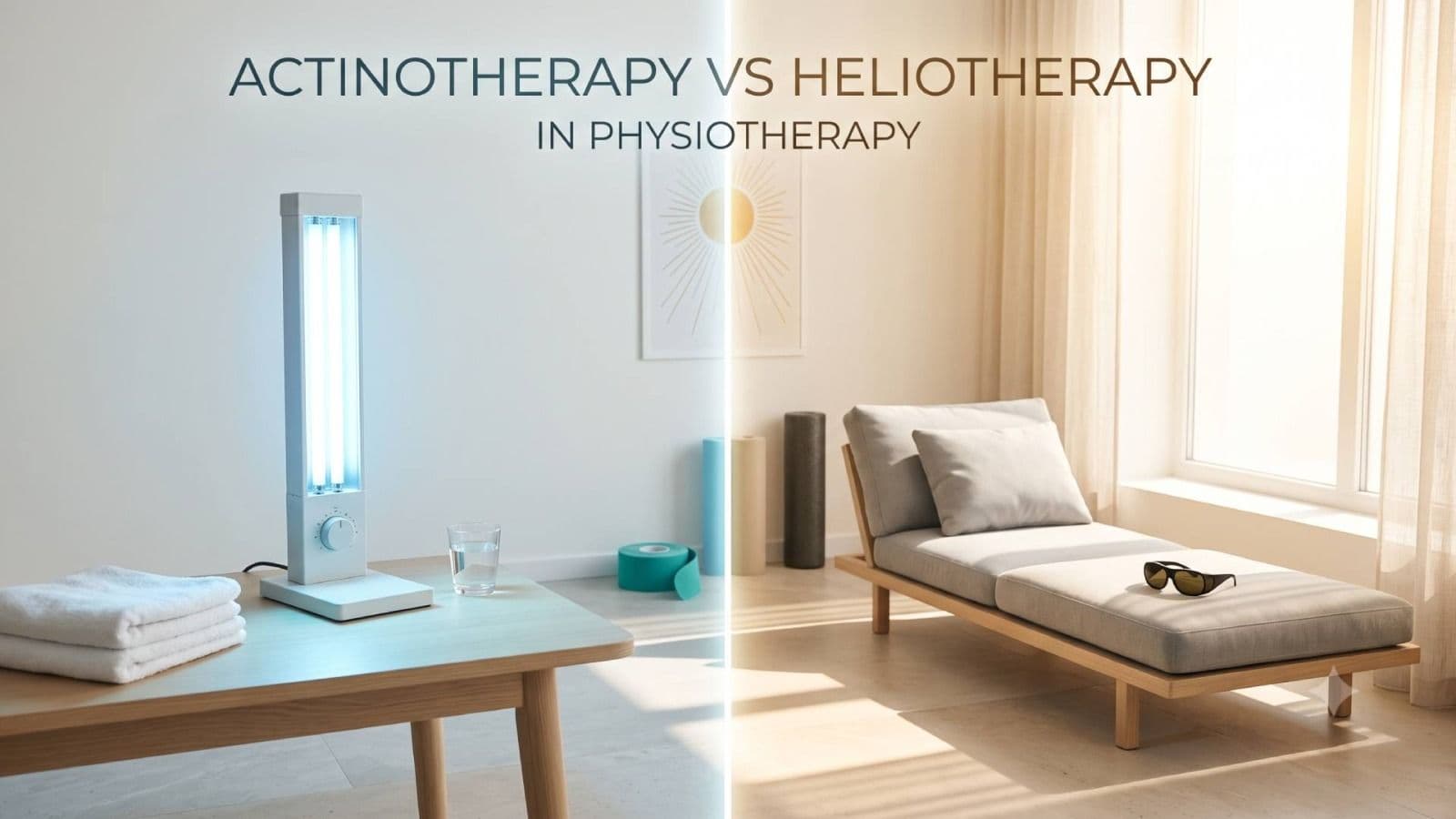
If you have ever come across the terms actinotherapy and heliotherapy while researching physiotherapy treatments, you are not alone in finding them confusing. Both belong to the family of light-based therapies used in physiotherapy, and both rely on similar wavelengths of radiation to trigger healing responses in the body. Yet they are not the same treatment, and using one in place of the other can affect your recovery outcomes.
In this guide, we break down actinotherapy and heliotherapy in physiotherapy in plain language, explain how each one works, compare their indications and contraindications side by side, and help you understand which approach a physiotherapist is likely to recommend for your specific condition. This article is written and reviewed with reference to physiotherapy textbooks, peer-reviewed research, and clinical practice standards, so you get information you can actually rely on.
What Is Actinotherapy in Physiotherapy?
Actinotherapy is a therapeutic modality that uses artificial sources of non-ionizing radiation, mainly ultraviolet (UV) and infrared (IR) rays, to treat various musculoskeletal, skin, and circulatory conditions. The term comes from the Greek word "aktis," meaning ray or beam, which is why actinotherapy is sometimes referred to as "ray therapy" or artificial light therapy.
Unlike sunlight, which contains a broad and unfiltered spectrum of radiation, actinotherapy uses controlled devices such as mercury vapor lamps, carbon arc lamps, and quartz lamps to deliver a specific, measured dose of UV or IR radiation directly to the target area. This precision is what makes actinotherapy a clinical tool rather than a general wellness practice.
Physiotherapy has a long relationship with light-based treatment. Actinotherapy, the therapeutic use of artificial non-ionizing radiation such as ultraviolet and infrared rays, formed a major part of the physiotherapist's toolkit for much of the 20th century, and it was recognized early on for its role in treating rickets and accelerating wound healing. Today, it remains part of the physiotherapy curriculum and continues to be used selectively, especially in dermatology-linked rehabilitation and chronic wound management.
How Actinotherapy Works
- UV radiation triggers erythema (controlled skin reddening), which stimulates local blood flow and has a bactericidal effect on the treated area.
- IR radiation penetrates deeper tissue layers, producing heat that relaxes muscles, improves local circulation, and reduces stiffness.
- The dosage, distance from the lamp, and exposure time are calculated precisely based on the patient's skin type and condition, which reduces the risk of burns compared to uncontrolled sun exposure.
Common Uses of Actinotherapy in Physiotherapy
- Chronic and infected wounds
- Psoriasis and eczema (in coordination with dermatology)
- Rickets and vitamin D deficiency-related bone conditions
- Muscular stiffness and localized pain
- Pressure sores in bedridden or geriatric patients
- Sinusitis and certain respiratory complaints (with IR application)
What Is Heliotherapy in Physiotherapy?
Heliotherapy, derived from the Greek word "helios" meaning sun, is the therapeutic use of natural sunlight to treat disease and promote healing. It is one of the oldest recorded forms of physical therapy, dating back to ancient Greek and Roman medicine, and was widely practiced in European sanatoriums during the late 1800s and early 1900s for conditions such as tuberculosis and rickets.
Heliotherapy is defined clinically as the use of sunlight or of an artificial source of ultraviolet, visible, or infrared radiation for therapeutic purposes. In physiotherapy practice, heliotherapy typically refers specifically to controlled, timed exposure to natural sunlight, taken in gradually increasing doses under professional guidance, rather than casual sunbathing.
How Heliotherapy Works
Natural sunlight contains a full spectrum of UV, visible, and infrared rays. When the body is exposed to this spectrum in measured doses:
- The skin synthesizes vitamin D, which supports bone mineralization and immune function.
- UV exposure has anti-inflammatory and antimicrobial effects on the skin.
- Sunlight exposure influences melatonin and serotonin regulation, which can improve mood and sleep quality.
- Increased circulation and gentle warming help ease joint and muscular discomfort.
Common Uses of Heliotherapy in Physiotherapy
- Osteomalacia and rickets
- Vitamin D deficiency contributing to bone or joint pain
- Rheumatoid arthritis and osteoarthritis-related stiffness
- Chronic lower back pain
- Obesity-linked mobility issues
- Insomnia and mood-related complaints alongside physical rehab
- General post-illness recovery and immune support
Actinotherapy vs Heliotherapy in Physiotherapy: The Core Difference
The simplest way to understand the difference is this: actinotherapy uses artificial, device-generated radiation under strict clinical control, while heliotherapy uses natural sunlight, timed and monitored by a therapist but not mechanically dosed. Both fall under the broader umbrella of phototherapy, but their source, precision, and practical application in a treatment plan are quite different.
| Parameter | Actinotherapy | Heliotherapy |
|---|---|---|
| Source of radiation | Artificial (UV/IR lamps, mercury vapor, carbon arc, quartz lamps) | Natural sunlight |
| Precision of dosage | Highly controlled and measurable | Approximate, dependent on weather, season, and time of day |
| Setting | Clinic or home-care session with equipment | Outdoors or near a sunlit window/balcony |
| Common indications | Wounds, skin infections, localized pain, sinusitis | Bone health, generalized joint stiffness, mood and sleep issues |
| Weather dependency | None, works year-round indoors | High, depends on sunlight availability |
| Risk of overexposure | Lower, since dose is calculated | Higher if unsupervised, risk of sunburn |
| Cost and accessibility | Requires specific equipment | No equipment cost, more accessible |
| Typical patient profile | Wound care patients, post-surgical patients, dermatology-linked cases | Elderly patients, patients with low vitamin D, general rehab support |
Actinotherapy vs Heliotherapy: Which One Does a Physiotherapist Recommend?
There is no single "better" option between the two. The choice depends entirely on your diagnosis, the affected body part, your overall health, and practical factors like access to sunlight or equipment.
A physiotherapist is more likely to recommend actinotherapy when:
- The condition needs an exact, repeatable radiation dose, such as a slow-healing wound or bedsore
- Weather or geography makes consistent sun exposure unreliable
- The treatment needs to be delivered indoors as part of a structured home-care session
- There is a skin infection that benefits from the germicidal effect of UV lamps
A physiotherapist is more likely to recommend heliotherapy when:
- The goal is broader, such as improving vitamin D levels, mood, or general musculoskeletal comfort
- The patient is mobile enough to sit outdoors safely for short periods
- The condition is chronic and benefits from gentle, natural, whole-body exposure rather than localized treatment
- The patient prefers a low-cost, equipment-free option as part of a home rehabilitation routine
In many home-based rehabilitation plans, especially for elderly patients recovering at home, physiotherapists combine short periods of supervised heliotherapy with other modalities to support bone health and mood, while reserving actinotherapy for specific localized problems like wounds or stiffness that need a controlled dose.
Precautions and Contraindications
Both therapies are safe when supervised by a trained physiotherapist, but neither should be self-administered without guidance, particularly for patients with pre-existing conditions.
Actinotherapy should be avoided or used with extreme caution in:
- Active fever or acute infection
- Cardiac conditions and uncontrolled hypertension
- Photosensitive skin conditions or active acne flare-ups
- Known light sensitivity from medication (certain antibiotics, retinoids)
- Malignant skin lesions unless specifically prescribed by an oncologist
Heliotherapy should be avoided or used with extreme caution in:
- Fever, chicken pox, or measles
- Uncontrolled cardiac disease or angina
- Leukemia or other conditions involving blood cell abnormalities
- Edema or fluid retention issues
- Conjunctivitis or active eye infections
- Hypervitaminosis D or excessive vitamin D levels already present
Because both therapies involve some degree of radiation exposure, dosage and duration should always be determined by a qualified physiotherapist after assessing the patient's skin type, medical history, and current medications. This is one of the biggest gaps in most consumer-facing articles on this topic: dosage safety and patient screening are rarely discussed, even though they matter more than the historical background of either therapy.
Why This Comparison Still Matters in Modern Physiotherapy
Some readers assume actinotherapy and heliotherapy are outdated techniques replaced entirely by newer electrotherapy modalities. In reality, both are still taught in physiotherapy curricula, including in standard student textbooks on electrotherapy and actinotherapy used to train physiotherapists, and light-based treatment continues to be studied for inflammatory skin conditions. Research on sunlight's anti-inflammatory properties and specific beneficial wavelengths has led to the increasingly successful use of selected light spectra in modern dermatological phototherapy, including narrowband UVB and UVA-1 treatment. Home-based physiotherapy patients, particularly the elderly and those recovering from surgery, often benefit from a hybrid approach: brief, physiotherapist-guided sun exposure combined with targeted equipment-based treatments like actinotherapy, electrotherapy, or manual therapy, depending on what the recovery plan calls for.
At Physio At Your Doorstep, our physiotherapists assess each patient individually before recommending any light-based or electro-modality treatment, ensuring the approach matches the diagnosis rather than applying a one-size-fits-all protocol.
How These Therapies Fit into a Complete Physiotherapy Plan
Actinotherapy and heliotherapy are rarely used as standalone treatments. They typically support a broader rehabilitation plan that may include manual therapy, therapeutic exercise, and other electrotherapy modalities. For example:
- A patient recovering from post-surgical rehabilitation may receive short actinotherapy sessions to support wound healing alongside strength and mobility exercises.
- An elderly patient under geriatric physiotherapy care may benefit from supervised heliotherapy to support bone density and mood, combined with balance training.
- A patient with joint pain under orthopaedic physiotherapy may be guided toward heliotherapy for general stiffness relief, while localized inflammation is treated with other modalities.
- Athletes under sports physiotherapy care sometimes use controlled UV or IR exposure to support faster recovery from soft tissue injuries.
If you are also comparing other physiotherapy modalities, our guides on TENS vs traction therapy and faradic and galvanic current in physiotherapy cover similar comparisons to help you understand what your physiotherapist may recommend and why.
Key Takeaways
- Actinotherapy uses artificial UV/IR devices for precise, controlled treatment, ideal for wounds, infections, and localized stiffness.
- Heliotherapy uses natural sunlight under supervision, better suited for bone health, generalized joint stiffness, and mood support.
- Neither therapy should be self-administered; both require a physiotherapist's assessment of dosage, duration, and contraindications.
- Most home-care rehabilitation plans use these therapies as a supporting element alongside exercise therapy, manual therapy, and other electro-modalities.
- The right choice depends on your specific diagnosis, mobility level, and access to sunlight or equipment, not on which therapy is "newer" or "better" in general.
Related reading: Types of Hydrotherapy in Physiotherapy
Frequently Asked Questions
What is the main difference between actinotherapy and heliotherapy in physiotherapy?
Actinotherapy uses artificial devices such as UV or IR lamps to deliver a precisely controlled radiation dose, while heliotherapy uses natural sunlight under a physiotherapist's supervision. Both fall under phototherapy, but actinotherapy offers more precision and heliotherapy offers broader, natural exposure.
Is heliotherapy safe to do at home without supervision?
Unsupervised sun exposure carries risks such as sunburn, overheating, and worsening of certain skin or cardiac conditions. Heliotherapy should be timed and monitored by a physiotherapist, particularly for elderly patients or those with pre-existing conditions.
Can actinotherapy be done as part of home physiotherapy?
Yes. Actinotherapy can be delivered at home using portable UV or IR devices, provided a qualified physiotherapist assesses the condition, sets the correct dosage, and monitors the treatment for safety.
Which conditions respond best to actinotherapy?
Actinotherapy is commonly used for chronic wounds, pressure sores, localized skin infections, muscular stiffness, and certain sinus-related complaints, where a controlled and repeatable radiation dose is beneficial.
Which conditions respond best to heliotherapy?
Heliotherapy is generally recommended for vitamin D deficiency, osteomalacia, rheumatoid arthritis, osteoarthritis-related stiffness, chronic low back pain, and general mood or sleep support during rehabilitation.
Are actinotherapy and heliotherapy the same as phototherapy?
Phototherapy is the broader medical term for any light-based treatment. Actinotherapy and heliotherapy are both types of phototherapy, distinguished mainly by their source of light, artificial versus natural.
Can these therapies be combined with other physiotherapy treatments?
Yes. They are typically used alongside manual therapy, exercise therapy, and other electrotherapy modalities such as TENS or faradic current, as part of a complete rehabilitation plan rather than as a standalone treatment.
Who should avoid actinotherapy or heliotherapy?
Patients with fever, uncontrolled cardiac conditions, active infections like chicken pox or measles, photosensitivity, certain skin cancers, or conditions affected by excess vitamin D should avoid these therapies unless specifically cleared by a physician and physiotherapist.
Final Thoughts
Actinotherapy and heliotherapy both use the healing properties of light, but they serve different purposes within a physiotherapy plan. Actinotherapy gives therapists precision and consistency for localized problems, while heliotherapy offers a natural, broader form of support that is especially useful for bone health and general wellbeing. Neither should be viewed as outdated or interchangeable; the right one depends entirely on your condition and recovery goals.
If you are unsure which approach suits your recovery, our certified physiotherapists at Physio At Your Doorstep can assess your condition at home and recommend the safest, most effective combination of therapies. Book an appointment or explore our full range of physiotherapy services to get started.
For further reading on the clinical background of light-based therapy, see DermNet NZ's overview of heliotherapy and the physiotherapy history archive on actinotherapy.
Related Service
Orthopaedic Physiotherapy at Home
Book a certified physiotherapist for orthopaedic physiotherapy across Bangalore & Pune.
Related Articles
Types of Hydrotherapy in Physiotherapy: Methods, Benefits and Which One You Need
Hydrotherapy is more than soaking in warm water. Here are the main types physiotherapists use, which condition each one suits, who should avoid it, and what you can safely do at home.
Read More
Ortho and Neuro Physiotherapy: A Complete Guide to Conditions, Treatment and Home Recovery
Orthopaedic physiotherapy treats bones, joints and muscles; neurological physiotherapy retrains movement after brain, spinal cord or nerve damage. Here is how each works, where they overlap, and what to expect from home care.
Read More
Agonist and Antagonist in Physiotherapy: A Complete, Evidence-Based Guide
Every joint moves through a pair of muscles working in opposition. Here is what agonist and antagonist muscles are, how reciprocal inhibition works, and why their balance decides pain, posture and recovery.
Read MoreNeed Professional Help?
Our expert physiotherapists are here to help you recover and stay healthy.