TENS vs Traction Physiotherapy Care and Rehab Guide
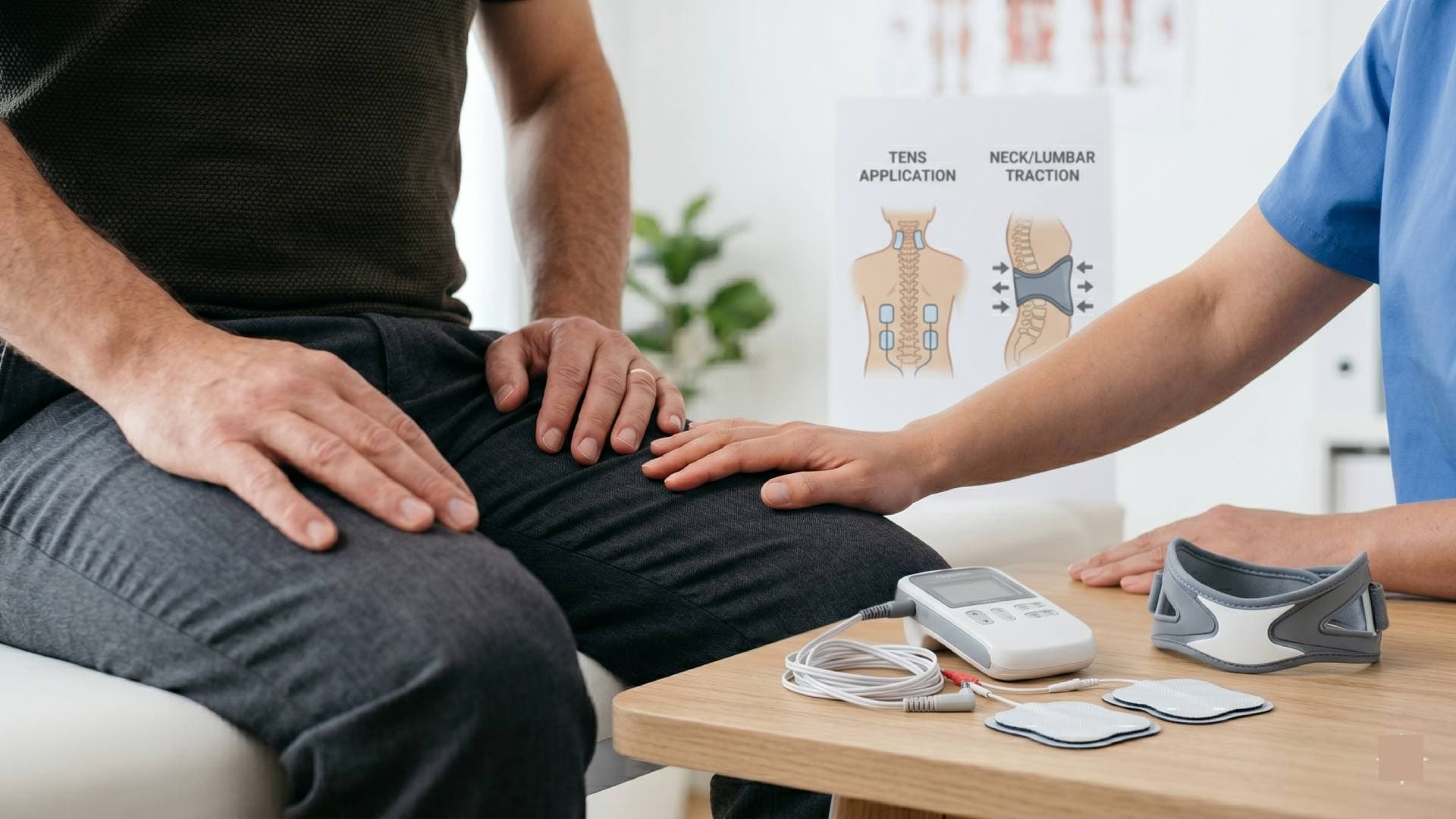
Introduction: Two Powerful Physiotherapy Modalities, One Important Decision When a physiotherapist recommends either TENS or traction as part of your treatment plan, it is natural to wonder what each therapy does, how they differ, and which one is better suited for your specific condition. Both are
Introduction: Two Powerful Physiotherapy Modalities, One Important Decision
When a physiotherapist recommends either TENS or traction as part of your treatment plan, it is natural to wonder what each therapy does, how they differ, and which one is better suited for your specific condition. Both are widely used electrotherapy and manual therapy modalities in modern physiotherapy practice, yet they work through completely different mechanisms and target distinct pain conditions.
This guide provides a research-backed, side-by-side comparison of TENS physiotherapy treatment vs traction physiotherapy treatment. Whether you are managing chronic back pain, a herniated disc, nerve compression, or musculoskeletal discomfort, understanding these two approaches will help you make an informed decision alongside your physiotherapist.
At Physio at Your Doorstep , our certified physiotherapists bring expert care directly to your home across Bangalore, tailoring treatment plans that may include TENS, traction, or a combination of both depending on your clinical needs.
What Is TENS Physiotherapy Treatment?
TENS stands for Transcutaneous Electrical Nerve Stimulation. It is a non-invasive, drug-free electrotherapy technique that uses low-voltage electrical impulses to modulate pain signals and promote the body’s natural healing response.
A TENS unit is a small, battery-operated device connected to adhesive electrode pads placed on the skin near the site of pain. Once activated, it delivers controlled electrical pulses through the skin to the underlying peripheral nerves.
How TENS Works: The Science Behind It
TENS therapy works through two primary mechanisms that are well-established in pain science:
-
Gate Control Theory: The electrical pulses from a TENS machine stimulate large-diameter sensory nerve fibers (A-beta fibers). These signals travel faster to the spinal cord than pain signals carried by smaller C-fibers and A-delta fibers. This effectively “closes the gate” on pain transmission to the brain, reducing the perceived intensity of pain.
-
Endorphin Release: At lower frequencies (typically 2 to 10 Hz), TENS stimulates the release of endorphins and enkephalins, the body’s own natural painkillers. These neurochemicals bind to opioid receptors and produce analgesic effects that can last beyond the actual treatment session.
Additionally, research indicates that TENS can reduce localized inflammation by improving microcirculation and modulating the release of pro-inflammatory neuropeptides.
Types of TENS
There are several modes of TENS delivery used in clinical physiotherapy practice:
Conventional TENS (High-Frequency TENS): Frequencies between 80 to 150 Hz with low intensity. This produces a comfortable tingling sensation and is effective for immediate, short-term pain relief.
Acupuncture-like TENS (Low-Frequency TENS): Frequencies of 1 to 10 Hz with higher intensity. This stimulates deeper tissues and promotes endorphin release for longer-lasting pain relief.
Burst TENS: Delivers bursts of high-frequency pulses at a low repetition rate, combining the benefits of both high and low-frequency modes.
Intensity-Modulated TENS: Varying intensity patterns to prevent nerve adaptation and sustain effectiveness throughout the session.
Conditions Treated by TENS Physiotherapy
TENS is used across a broad spectrum of acute and chronic pain conditions, including:
-
Chronic lower back pain
-
Neck and shoulder pain
-
Knee osteoarthritis and joint pain
-
Fibromyalgia
-
Neuropathic pain and diabetic peripheral neuropathy
-
Postoperative pain management
-
Musculoskeletal injuries (sprains, strains, tendinitis)
-
Pregnancy-related back pain (under supervision)
-
Sports injuries
Our Orthopaedic Physiotherapy team regularly incorporates TENS as part of comprehensive treatment plans for joint and musculoskeletal conditions.
Benefits of TENS Therapy
-
Non-invasive and drug-free pain management
-
Can be used as a standalone treatment or alongside exercise therapy, manual therapy, and other electrotherapy modalities
-
Portable and can be prescribed for supervised home use
-
Minimal side effects when used correctly
-
Suitable for patients who cannot tolerate pharmacological pain relief
-
Useful for both acute injuries and long-term chronic pain conditions
Limitations of TENS Therapy
It is important to set realistic expectations. TENS relieves pain during and shortly after treatment but does not address the structural or mechanical root cause of the problem. Relief typically diminishes once the device is turned off. Therefore, TENS is most effective when integrated into a broader rehabilitation program that includes therapeutic exercise, manual therapy, and patient education.
Who Should Avoid TENS?
TENS is contraindicated or requires extra caution in the following groups:
-
Individuals with implanted cardiac pacemakers or electronic devices
-
Those with epilepsy or a history of seizure disorders
-
Patients with active deep vein thrombosis
-
Pregnant women (particularly over the abdomen or lower back in the first trimester)
-
Individuals with active malignancy over the treatment area
-
People with compromised skin sensation or open wounds at electrode sites
What Is Traction Physiotherapy Treatment?
Traction physiotherapy is a treatment technique that applies a controlled mechanical force to stretch and separate the joints of the spine (or other joints), creating space between vertebrae, reducing disc pressure, and relieving nerve compression. In the context of physiotherapy, spinal traction is the most commonly discussed form, applied to either the cervical (neck) or lumbar (lower back) spine.
The core principle of traction is mechanical decompression. By gently pulling the vertebrae apart, the treatment reduces the compressive load on intervertebral discs, facet joints, and spinal nerve roots.
How Traction Works: The Science Behind It
When traction force is applied to the spine, several biomechanical and physiological effects occur:
Vertebral Separation: The pulling force increases the distance between adjacent vertebrae, reducing intradiscal pressure. This creates a relative negative pressure (vacuum effect) within the disc, which can encourage retraction of herniated disc material.
Disc Hydration and Nutrition: Reduced disc pressure allows improved uptake of fluids, oxygen, and nutrients into the avascular intervertebral disc, supporting tissue repair and disc health.
Nerve Root Decompression: By widening the intervertebral foramina (the openings through which spinal nerves exit), traction reduces direct mechanical pressure on compressed or irritated nerve roots, which is a key contributor to radicular pain (pain radiating down the arm or leg).
Muscle Relaxation: The sustained or intermittent stretch also reduces the tone of paravertebral muscles that may be in protective spasm, further relieving pain and improving range of motion.
A study published in the Journal of Physical Therapy Science confirmed that traction therapy effectively reduces intradiscal pressure and is a well-validated conservative treatment for intervertebral disc herniation and associated radiculopathy.
Types of Traction Used in Physiotherapy
Manual Traction: A trained physiotherapist applies a precise, hands-on pulling force to the cervical or lumbar spine. This allows for real-time adjustment based on patient feedback and tolerance.
Mechanical (Motorized) Traction: A specialized machine delivers a controlled, consistent traction force. The force, angle, and duration can be precisely programmed for cervical or lumbar decompression.
Intermittent Traction: The traction force cycles between periods of pull and rest, which enhances disc hydration and is generally better tolerated than continuous traction.
Continuous Traction: A sustained force applied over a fixed period, typically used for more acute presentations with strict monitoring.
Positional Traction: The patient is positioned using bolsters and supports to achieve targeted segmental distraction without a mechanical pull device.
Conditions Treated by Traction Physiotherapy
Traction physiotherapy is most effective for conditions where mechanical compression is the primary driver of pain:
-
Lumbar disc herniation and prolapse
-
Cervical disc herniation and bulge
-
Radiculopathy (sciatica, cervical radiculopathy)
-
Degenerative disc disease
-
Spinal stenosis (narrowing of the spinal canal)
-
Facet joint syndrome
-
Spondylolisthesis (slippage of one vertebra over another)
-
Chronic neck pain with nerve involvement
If you are experiencing any of these conditions, our Orthopaedic Physiotherapy service and Post Surgical Physiotherapy team are equipped to assess whether traction is appropriate for your case.
Benefits of Traction Therapy
-
Directly addresses the structural cause of nerve compression pain
-
Proven effective for disc-related conditions and radiculopathy
-
Can significantly reduce the need for surgery in appropriate candidates
-
Improves spinal mobility and range of motion
-
Enhances disc nutrition and supports tissue healing
-
Research shows motorized traction added to conventional physiotherapy is more effective than conventional physiotherapy alone for lumbar discopathy
Limitations of Traction Therapy
Traction is a specialized treatment that requires careful patient selection. It is not a universal solution for back or neck pain and is less suitable for conditions involving instability, active inflammation, or non-mechanical pain sources. A thorough clinical assessment by a qualified physiotherapist is essential before beginning traction.
Who Should Avoid Traction?
Traction therapy is contraindicated in:
-
Acute inflammatory conditions or active infection of the spine
-
Spinal fractures, tumors, or metastatic disease
-
Severe osteoporosis
-
Spinal cord compression with progressive neurological deficit
-
Pregnancy (lumbar traction)
-
Severe anxiety or inability to relax during treatment
-
Uncontrolled hypertension or cardiovascular instability
-
Aortic aneurysm (abdominal traction)
TENS vs Traction: A Side-by-Side Comparison
| Feature | TENS Physiotherapy | Traction Physiotherapy |
| Primary Mechanism | Electrical nerve stimulation to block pain signals and release endorphins | Mechanical stretching to decompress spinal structures |
| Type of Treatment | Electrotherapy (non-mechanical) | Manual or mechanical decompression |
| Target Tissue | Peripheral nerves, muscle tissue, sensory pathways | Intervertebral discs, facet joints, nerve roots, paravertebral muscles |
| Best Suited For | Widespread chronic pain, neuropathic pain, musculoskeletal pain, fibromyalgia | Disc herniation, radiculopathy, spinal stenosis, nerve root compression |
| Mechanism of Pain Relief | Neurological modulation (gate control + endorphin release) | Mechanical decompression and disc hydration |
| Invasiveness | Non-invasive (electrode pads on skin) | Non-invasive (mechanical or manual force application) |
| Session Duration | Typically 20 to 60 minutes | Typically 15 to 30 minutes |
| Onset of Relief | Immediate during session; may last up to 24 hours post-session | Gradual over multiple sessions; cumulative structural benefit |
| Requires Specialized Equipment | TENS unit (portable or clinical) | Traction table or motorized traction machine |
| Can Be Used at Home | Yes, under physio supervision | No, requires clinical setting |
| Addresses Root Cause | No (symptom relief only) | Partially (reduces mechanical compression) |
| Evidence Strength | Strong for acute and chronic musculoskeletal pain | Strong for disc herniation and radiculopathy |
| Typical Number of Sessions | Ongoing (as required for pain management) | 8 to 15 sessions depending on condition severity |
Can TENS and Traction Be Used Together?
Yes, and in many clinical protocols, they are. A retrospective study comparing conventional physiotherapy, motorized traction, and spinal decompression in patients with lumbar discopathy found that traction added to conventional physiotherapy (which often includes TENS) produced significantly better outcomes than conventional physiotherapy alone.
In practice, a typical combined treatment session may look like this:
-
Hot pack or ultrasound to warm tissues and prepare the spine for decompression
-
Traction therapy for targeted spinal decompression (lumbar or cervical)
-
TENS application for immediate post-traction pain relief and muscle relaxation
-
Therapeutic exercises to stabilize and strengthen the treated region
This multimodal approach is consistent with evidence-based physiotherapy practice and is what our clinical team at Physio at Your Doorstep delivers during home visits across Bangalore.
Which Treatment Is Right for You?
The choice between TENS and traction, or a combination of both, should always be guided by a qualified physiotherapist following a thorough clinical assessment. That said, here are some general considerations:
Choose TENS if:
-
Your primary complaint is widespread chronic pain, muscle pain, or neuropathic pain
-
You have fibromyalgia, osteoarthritis, or tendinitis
-
You need a portable, easy-to-use pain management tool for daily use
-
You have no specific spinal disc pathology diagnosed on imaging
-
You are managing postoperative pain as part of a broader rehab protocol
Consider Traction if:
-
You have a confirmed disc herniation, bulge, or prolapse on MRI
-
You experience radiating pain (sciatica or arm pain) from nerve root compression
-
You have been diagnosed with cervical or lumbar radiculopathy
-
Conservative treatments alone have not provided lasting relief
-
You are seeking a non-surgical alternative for spinal decompression
Consider both if:
-
You have a disc-related condition with significant associated muscle spasm and pain
-
Your physiotherapist recommends a multimodal approach as part of your rehabilitation
Our Neurological Physiotherapy team also works with patients who experience nerve-related pain from non-spinal causes, and can assess whether TENS is appropriate for neurological pain management.
Home Physiotherapy for TENS and Traction in Bangalore
One of the most frequently asked questions is whether these treatments can be received at home. TENS therapy is entirely portable and can be administered during home visits by a qualified physiotherapist. Manual traction can also be performed at home by a skilled physiotherapist without the need for a motorized machine.
At Physio at Your Doorstep , our team of experienced physiotherapists brings certified clinical care directly to your home across JP Nagar, BTM Layout, Koramangala, Jayanagar, HSR Layout, Whitefield, and other areas of Bangalore.
We offer:
-
Comprehensive pain assessment and treatment planning
-
TENS therapy as part of targeted electrotherapy protocols
-
Manual traction and spinal mobilization for disc-related conditions
-
Therapeutic exercise and rehabilitation programs
-
Ongoing monitoring and progress reviews
Whether you are recovering from surgery, managing a chronic condition, or dealing with an acute injury, home physiotherapy ensures you receive consistent, high-quality care in the comfort and safety of your own environment.
Explore our Sports Physiotherapy and Geriatric Physiotherapy services for specialized care tailored to your age group and lifestyle.
Key Takeaways
-
TENS physiotherapy uses low-voltage electrical impulses to block pain signals and stimulate endorphin release. It is ideal for chronic musculoskeletal pain, neuropathic pain, fibromyalgia, and post-injury pain management.
-
Traction physiotherapy uses controlled mechanical force to decompress spinal structures, making it highly effective for disc herniations, radiculopathy, and nerve root compression.
-
Both treatments are non-invasive and safe when administered by qualified physiotherapists.
-
TENS provides symptomatic pain relief without addressing the mechanical cause, while traction targets the structural source of spinal compression pain.
-
The two modalities are frequently combined in clinical practice for superior outcomes, particularly in patients with disc-related spinal conditions.
-
Always seek a professional physiotherapy assessment before beginning either treatment.
Resources and Further Reading
-
Florjancic K, Vauhnik R. Effects of Standard Physiotherapy with the Addition of Mechanical Traction on Pain, Physical Activity and Quality of Life in Patients with Knee Osteoarthritis. Medicina . 2025;61(3):507. https://doi.org/10.3390/medicina61030507
-
PMC: Influences of Spinal Decompression Therapy and General Traction Therapy on Pain, Disability, and Straight Leg Raising. Journal of Physical Therapy Science . https://pmc.ncbi.nlm.nih.gov/articles/PMC4339166/
-
PMC: Comparison of Motorized Traction and Non-surgical Spinal Decompression in Chronic Low Back Pain. https://pmc.ncbi.nlm.nih.gov/articles/PMC11420602/
-
Cleveland Clinic: Transcutaneous Electrical Nerve Stimulation (TENS). https://my.clevelandclinic.org/health/treatments/15840-transcutaneous-electrical-nerve-stimulation-tens
This blog is intended for informational purposes only and does not constitute medical advice. Always consult a qualified physiotherapist or healthcare professional for diagnosis and treatment recommendations specific to your condition.
Written by the clinical team atPhysio at Your Doorstep| Home Physiotherapy in Bangalore | Call: +91 82337 87737
Frequently Asked Questions (FAQ)
-
What is the difference between TENS and traction physiotherapy? TENS (Transcutaneous Electrical Nerve Stimulation) uses gentle electrical pulses delivered through skin electrode pads to block pain signals and trigger the body’s natural pain-killing response. Traction physiotherapy applies a controlled mechanical force to stretch and decompress the spine, reducing pressure on intervertebral discs and nerve roots. TENS is primarily a pain-modulating technique, while traction is a structural decompression technique.
-
Is TENS therapy effective for back pain? Yes. TENS is widely used for both acute and chronic lower back pain. It can significantly reduce pain intensity during and immediately after treatment by stimulating nerve pathways and promoting endorphin release. However, TENS provides symptomatic relief rather than treating the mechanical cause of back pain, so it is most effective when combined with therapeutic exercise and other physiotherapy interventions.
-
Is traction physiotherapy safe for disc herniation? Traction is one of the most evidence-backed conservative treatments for lumbar disc herniation and cervical disc herniation. When performed by a trained physiotherapist and based on appropriate clinical assessment and imaging findings, it is considered safe and effective. However, it is not suitable for all patients, and contraindications such as fractures, active infection, or severe osteoporosis must be ruled out first.
-
How many sessions of traction therapy do I need? The number of sessions varies depending on the severity and type of your condition. Most clinical protocols recommend between 8 and 15 sessions, typically scheduled 3 to 5 times per week. Your physiotherapist will reassess your progress regularly and adjust the frequency and intensity of traction accordingly.
-
Can TENS be used during pregnancy? TENS is generally not recommended over the abdomen or lower back during the first trimester of pregnancy due to insufficient safety data. However, it can be used under close physiotherapy supervision for pregnancy-related pelvic girdle pain and back pain in the later stages of pregnancy. Our team offers specialized Physiotherapy in Pregnancy services with safe, evidence-based treatment options.
-
Can I receive TENS or traction therapy at home in Bangalore? TENS therapy can be fully administered at home by a qualified physiotherapist. Manual traction techniques can also be performed at home during physiotherapy visits without the need for a motorized machine. Physio at Your Doorstep offers home physiotherapy services across Bangalore, including TENS and manual therapy. Contact us to book a home visit.
-
Are TENS and traction physiotherapy painful? TENS therapy is generally comfortable. Patients typically experience a mild tingling or buzzing sensation. The intensity is always kept within the patient’s comfort range. Traction therapy may feel unusual at first, as patients experience a gentle pulling sensation, but it should not be painful. Any discomfort should be reported to the physiotherapist immediately so the force or position can be adjusted.
-
Which is better for sciatica: TENS or traction? For classic sciatica caused by lumbar disc herniation compressing the sciatic nerve, traction therapy is often the more targeted treatment because it directly addresses the mechanical compression at the root of the problem. TENS can be a valuable adjunct for managing the radiating leg pain and associated muscle spasm. A physiotherapy assessment will determine which combination is most appropriate for your presentation.
-
How long does a TENS therapy session last? A TENS session in a clinical physiotherapy setting typically lasts between 20 and 60 minutes. Some patients use TENS devices at home for shorter sessions of 20 to 30 minutes, several times a day. Your physiotherapist will guide you on the optimal session length and frequency based on your condition.
-
Is traction therapy the same as spinal decompression? Traction is one method of achieving spinal decompression. Both terms are sometimes used interchangeably, but spinal decompression therapy (particularly non-surgical spinal decompression or NSD) uses a more sophisticated computerized approach that adjusts the traction angle and force in real time to target specific spinal segments and create a true negative intradiscal pressure. Traditional traction applies a more general pull along the spine’s axis. Both have their place in physiotherapy, and your physiotherapist will recommend the most appropriate form of decompression based on your diagnosis.
Related Service
Orthopaedic Physiotherapy at Home
Book a certified physiotherapist for orthopaedic physiotherapy across Bangalore & Pune.
Related Articles

Agonist and Antagonist in Physiotherapy: A Complete, Evidence-Based Guide
Every joint moves through a pair of muscles working in opposition. Here is what agonist and antagonist muscles are, how reciprocal inhibition works, and why their balance decides pain, posture and recovery.
Read More
Ortho and Neuro Physiotherapy: A Complete Guide to Conditions, Treatment and Home Recovery
Orthopaedic physiotherapy treats bones, joints and muscles; neurological physiotherapy retrains movement after brain, spinal cord or nerve damage. Here is how each works, where they overlap, and what to expect from home care.
Read More
Types of Aerobic Training in Physiotherapy: A Complete Evidence-Based Guide
Rehabilitation cardio is not a gym session. Learn the eight types of aerobic training physiotherapists use, how intensity is measured, which type fits your condition, and how to progress safely.
Read MoreNeed Professional Help?
Our expert physiotherapists are here to help you recover and stay healthy.