Hemiplegia Treatment Physiotherapy Exercise: A Complete, Evidence-Based Recovery Guide
Hemiplegia appears in more than 80 percent of stroke survivors. Here are the physiotherapy exercises that actually work at each stage of recovery, how the Brunnstrom stages guide treatment, and what a realistic timeline looks like.
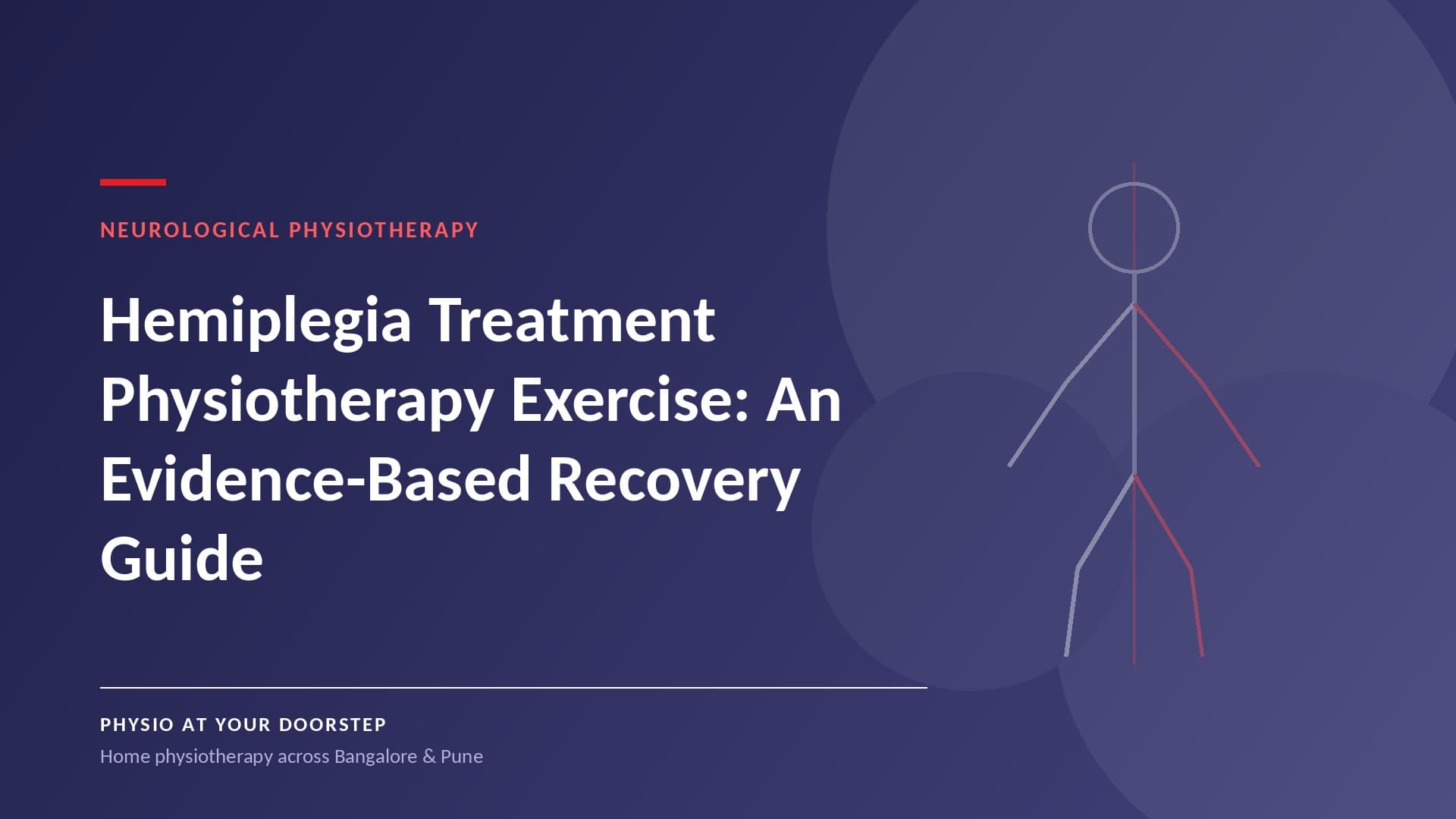
Hemiplegia, the paralysis of one side of the body, is one of the most common outcomes of stroke, brain injury, and certain neurological disorders. In India alone, stroke incidence ranges between 105 and 152 cases per 100,000 people every year, and studies from Indian hospitals report that hemiplegia or hemiparesis appears in more than 80 percent of stroke survivors, regardless of age. For patients and families facing this diagnosis, the most pressing question is almost always the same: what physiotherapy exercises actually help, and how fast can function return?
This guide answers that question in full. It covers what hemiplegia is, why physiotherapy sits at the centre of recovery, the recognised stages of neurological healing, and the specific hemiplegia treatment physiotherapy exercise techniques that clinicians use at each stage. It also explains how home-based rehabilitation supports faster, safer recovery for patients in Bangalore and beyond.
What Is Hemiplegia?
Hemiplegia refers to complete paralysis of one side of the body, affecting the arm, leg, and sometimes facial muscles on that side. It occurs when the area of the brain or spinal cord controlling movement on the opposite side of the body is damaged. Because the brain's motor pathways cross over at the brainstem, damage to the left hemisphere typically causes right-sided hemiplegia, and damage to the right hemisphere causes left-sided weakness.
Hemiplegia vs Hemiparesis: What Is the Difference?
These two terms are often used interchangeably, but they describe different severities of the same problem. Hemiplegia means total loss of voluntary movement and muscle control on one side of the body. Hemiparesis means partial weakness, where some voluntary movement is still present but strength, coordination, and control are reduced. Many patients move through hemiplegia into hemiparesis, and eventually toward fuller recovery, as physiotherapy and neuroplasticity take effect. Understanding which stage a patient is in helps a physiotherapist choose the right exercise approach.
What Causes Hemiplegia?
While stroke is the leading cause, hemiplegia can result from several conditions:
- Stroke (ischemic or hemorrhagic): the single most common cause in adults, and the fourth leading cause of death in India
- Traumatic brain injury: from falls, road accidents, or sports injuries
- Cerebral palsy: hemiplegic cerebral palsy in children, caused by brain injury before, during, or shortly after birth
- Brain tumours: growths that compress or damage motor pathways
- Spinal cord lesions and infections: such as encephalitis or meningitis affecting motor control centres
- Multiple sclerosis: in cases where demyelination affects one hemisphere's motor tracts more heavily
Common Signs and Symptoms of Hemiplegia
- Complete or partial loss of movement on one side of the body
- Muscle stiffness (spasticity) or complete floppiness (flaccidity) in the early stage
- Difficulty with balance, sitting, standing, or walking
- Drooping on one side of the face and slurred speech
- Loss of fine motor control in the hand and fingers
- Fatigue, reduced endurance, and emotional changes such as frustration or low mood
If you notice sudden onset of these symptoms, especially facial drooping, arm weakness, or slurred speech, this is a medical emergency and requires immediate hospital care before any physiotherapy begins.
Why Physiotherapy Is the Cornerstone of Hemiplegia Treatment
Physiotherapy works because the brain retains the ability to reorganise itself after injury, a property known as neuroplasticity. Repetitive, task-specific movement practice encourages undamaged areas of the brain to take over functions once controlled by the injured region. A widely cited Cochrane systematic review of physical rehabilitation approaches after stroke found consistent evidence that structured therapy improves motor function, mobility, and independence compared with no structured intervention.
Physiotherapy for hemiplegia focuses on five core goals:
- Preventing complications such as joint contractures, muscle wasting, and pressure sores
- Restoring voluntary movement and strength on the affected side
- Improving balance, posture, and coordination
- Retraining functional skills like walking, sitting, standing, and grasping
- Supporting independence in daily activities and reducing caregiver burden
Because these goals evolve as the patient recovers, treatment is never a fixed exercise sheet. It is adjusted continuously based on the patient's recovery stage, which is where the Brunnstrom approach becomes useful.
Stages of Hemiplegia Recovery: The Brunnstrom Approach
Developed by physiotherapist Signe Brunnstrom, this framework describes six stages of motor recovery after stroke-induced hemiplegia. While modern rehabilitation blends this model with other evidence-based methods, it remains a useful way to understand what to expect and which exercises are appropriate at each point.
| Stage | What Happens | Physiotherapy Focus |
|---|---|---|
| 1: Flaccid | No voluntary movement, muscles are limp | Positioning, passive range of motion, prevention of contractures |
| 2: Synergy appears | Basic reflexive movement patterns emerge | Sensory stimulation, early active-assisted movement |
| 3: Spasticity peaks | Voluntary synergy movement develops, but muscle tone is highest | Stretching, tone management, controlled facilitation |
| 4: Spasticity decreases | Some movement outside of synergy patterns begins | Isolated joint movement practice, functional tasks |
| 5: Complex movement returns | Coordination improves, synergy patterns fade | Strengthening, coordination drills, gait training |
| 6: Near-normal control | Spasticity disappears, individual joint control is possible | Advanced balance, speed, and endurance training |
A patient can plateau at any stage depending on the severity and location of brain damage, so recovery is rarely a straight line. This is precisely why hemiplegia treatment physiotherapy exercise plans must be personalised and reassessed regularly rather than followed from a generic sheet.
Hemiplegia Treatment Physiotherapy Exercise Techniques That Work
1. Passive Range of Motion (PROM) Exercises
In the flaccid stage, the physiotherapist or caregiver gently moves the affected shoulder, elbow, wrist, hip, knee, and ankle through their full range. This prevents stiffness and joint contractures and maintains tissue flexibility before voluntary movement returns.
2. Active-Assisted and Active Exercises
As voluntary control begins, the patient attempts the movement while the therapist assists just enough to complete it. Over time, assistance is withdrawn so the patient completes the movement independently, strengthening the neural pathways involved.
3. Strengthening Exercises
Once some voluntary control is present, targeted strengthening of the affected shoulder, hip, and core muscles helps rebuild the base needed for sitting, standing, and walking. Resistance bands, light weights, and body-weight exercises are introduced gradually.
4. Balance and Postural Training
Static balance (sitting or standing still) progresses to dynamic balance (weight shifting, reaching, stepping). Activities such as standing on a firm then unstable surface, tandem standing, and controlled weight transfers rebuild the postural control lost after brain injury.
5. Gait Training
Walking retraining includes assisted walking, treadmill practice, step training, and stair negotiation, often supported by a cane, walker, or ankle-foot orthosis in early stages. Repetitive, task-specific gait practice is one of the most well-supported interventions in stroke rehabilitation research.
6. Constraint-Induced Movement Therapy (CIMT)
For selected patients with some hand and arm movement remaining, the stronger, unaffected limb is gently restrained for set periods each day, forcing repeated use of the affected limb. Evidence shows this can meaningfully improve upper limb function in appropriately selected candidates.
7. Mirror Therapy
The patient watches the reflection of their unaffected limb moving in a mirror positioned to create the illusion that the affected limb is moving normally. This visual feedback can help "trick" the brain into reactivating motor pathways on the affected side.
8. Task-Specific Functional Training
Rather than isolated exercises alone, therapy increasingly focuses on practising real tasks: reaching for a cup, buttoning a shirt, standing from a chair, or climbing a single step. This approach translates therapy gains directly into daily independence.
9. Technology-Assisted Therapy
Neuromuscular electrical stimulation, robotic-assisted training, and virtual reality programs are increasingly used alongside conventional physiotherapy to provide repetitive, engaging practice, particularly for patients who plateau with traditional methods alone.
A Sample Hemiplegia Exercise Plan by Recovery Stage
This is a general illustration of how a program might be structured. Every plan should be personalised by a qualified physiotherapist after assessment.
Early stage (flaccid, bedridden):
- Passive shoulder, elbow, wrist, hip, knee, and ankle range of motion, 2 sets daily
- Proper limb positioning to prevent shoulder subluxation and foot drop
- Gentle sensory stimulation of the affected side
Middle stage (spasticity present, some voluntary movement):
- Active-assisted reaching and grasping exercises
- Bridging and side-lying leg exercises for hip control
- Sitting balance practice on the edge of a bed or firm surface
- Gentle stretching for tight muscle groups
Later stage (coordination returning):
- Standing balance with support, progressing to unsupported standing
- Step and weight-transfer practice
- Functional tasks such as reaching for objects at different heights
- Supervised walking practice with or without a walking aid
Benefits of Home-Based Physiotherapy for Hemiplegia Patients
Home-based rehabilitation has become the preferred option for many families managing hemiplegia, and for good clinical reason:
- Familiar environment: practising real transfers, like getting in and out of the patient's own bed or bathroom, builds functional skills that transfer directly to daily life
- Reduced fatigue and infection risk: avoiding travel to a clinic is especially valuable for patients with limited mobility or a weakened immune system
- Better consistency: regular home sessions are easier to maintain than repeated clinic visits, and consistency is one of the strongest predictors of recovery outcomes
- Family involvement: caregivers learn safe transfer techniques, positioning, and home exercises directly, which supports practice between sessions
At Physio At Your Doorstep, our neurological physiotherapy service is built specifically around this model, bringing certified physiotherapists to the patient's home across Bangalore and Pune for structured, doctor-guided hemiplegia rehabilitation.
The Role of Family and Caregivers in Recovery
Caregivers are a critical part of the rehabilitation team. Physiotherapists train family members on safe transfer techniques, correct positioning to prevent pressure sores and joint deformity, and simple home exercises that can be practised between professional sessions. This caregiver involvement is particularly important for elderly hemiplegia patients, where family support often determines how consistently therapy is followed at home. Our detailed guide on physiotherapy for elderly patients at home in Bangalore covers this in more depth.
How Long Does Hemiplegia Recovery Take?
Recovery timelines vary widely based on the severity and location of the brain injury, the patient's age and general health, how early rehabilitation begins, and how consistently therapy is followed. Many patients see the fastest gains in the first three to six months after a stroke, a window often called the critical recovery period, though meaningful improvement can continue well beyond a year with sustained, structured physiotherapy. Starting physiotherapy as early as medically safe, often within 24 to 48 hours of stabilisation, is associated with better long-term outcomes.
Choosing the Right Physiotherapist for Hemiplegia Treatment
Hemiplegia rehabilitation is a specialised area of neurological physiotherapy, distinct from general orthopaedic or musculoskeletal treatment. When choosing a physiotherapist, look for:
- A qualified BPT or MPT physiotherapist with specific experience in neurological rehabilitation
- A structured assessment process before treatment begins
- A clear, individualised plan that adapts as the patient progresses through recovery stages
- The ability to train family caregivers alongside the patient
Our team, led by Dr. Atharva Mishra, includes physiotherapists experienced in neurological, geriatric, and post-surgical rehabilitation, delivered entirely at the patient's home.
Hemiplegia Physiotherapy at Home in Bangalore
If you are searching for hemiplegia treatment physiotherapy exercise support in Bangalore, Physio At Your Doorstep provides certified, home-based neurological physiotherapy across more than 40 areas of the city, including Koramangala, HSR Layout, Whitefield, Indiranagar, JP Nagar, Jayanagar, BTM Layout, Electronic City, Marathahalli, and Bellandur. Our physiotherapists bring the equipment needed for gait training, balance work, and strengthening exercises directly to your home, so recovery happens in the environment where the patient will actually be living and moving day to day.
Since hemiplegia most commonly affects stroke survivors, many of whom are elderly, our geriatric physiotherapy service works closely alongside neurological rehabilitation to address age-related balance issues, joint stiffness, and fall risk at the same time. Same-day appointments are available across Bangalore, and our team is on call 24x7 for urgent rehabilitation needs. You can check the full list of areas we serve in Bangalore here.
Frequently Asked Questions
What is the best physiotherapy treatment for hemiplegia?
There is no single "best" treatment. The most effective approach combines range of motion exercises, strengthening, balance training, gait training, and task-specific practice, adjusted to the patient's current recovery stage and reassessed regularly by a qualified physiotherapist.
What exercises are given for hemiplegia patients?
Exercises typically include passive and active range of motion movements, strengthening of the affected shoulder, hip, and core, sitting and standing balance drills, gait training, and functional practice like reaching, grasping, and standing from a chair.
How long does it take to recover from hemiplegia with physiotherapy?
Most significant improvement occurs within the first three to six months after the injury, though continued gains are possible for a year or longer with consistent, structured physiotherapy. Recovery speed depends on injury severity, age, and how early treatment begins.
Is hemiplegia curable with physiotherapy?
Physiotherapy cannot reverse the original brain damage, but it can substantially restore function through neuroplasticity, helping many patients regain independent movement, walking ability, and daily living skills. The degree of recovery varies from patient to patient.
What is the difference between hemiplegia and hemiparesis?
Hemiplegia is complete paralysis of one side of the body, while hemiparesis is partial weakness with some voluntary movement retained. Many patients progress from hemiplegia toward hemiparesis and further recovery as therapy takes effect.
Can physiotherapy be done at home for hemiplegia patients?
Yes. Home-based physiotherapy is widely used for hemiplegia because it allows practice of real-life transfers and tasks in the patient's own environment, reduces travel-related fatigue, and often improves consistency of therapy sessions.
What causes hemiplegia besides stroke?
Other causes include traumatic brain injury, hemiplegic cerebral palsy in children, brain tumours, multiple sclerosis, and certain brain infections such as encephalitis or meningitis.
How many times a week should hemiplegia physiotherapy be done?
Most rehabilitation programs recommend three to six sessions per week during the active recovery phase, though frequency is adjusted based on the patient's tolerance, medical stability, and specific goals set by the treating physiotherapist.
What is constraint-induced movement therapy?
Constraint-induced movement therapy involves restraining the unaffected limb for set periods each day to encourage repeated, intensive use of the affected limb. It is used for selected patients who have some retained hand and arm movement.
When should physiotherapy start after a stroke causing hemiplegia?
Physiotherapy typically begins as soon as the patient is medically stable, often within 24 to 48 hours of the stroke, since earlier mobilisation is generally associated with better functional outcomes.
Final Thoughts
Hemiplegia recovery is rarely quick, but it is rarely hopeless either. The evidence is consistent: structured, stage-appropriate physiotherapy, started early and followed consistently, gives patients the best chance of regaining movement, balance, and independence. Whether recovery is in its first flaccid week or its twelfth month of steady strengthening, the right exercise plan, delivered by the right hands, makes the difference.
If you or a family member in Bangalore needs hemiplegia treatment physiotherapy exercise support at home, book an appointment with Physio At Your Doorstep or call +91 82337 87737 for a same-day consultation.
For further clinical reading: Hemiplegia overview on Physiopedia.
Related Service
Neurological Physiotherapy at Home
Book a certified physiotherapist for neurological physiotherapy across Bangalore & Pune.
Related Articles
Advanced Neuro Physiotherapy Techniques: A Complete, Evidence-Based Guide
When the brain, spinal cord, or nerves are injured, the body often forgets how to move. Here are the ten advanced neuro physiotherapy techniques used today, the science behind each one, and which conditions they suit best.
Read More
Facial Palsy Physiotherapy Treatment: A Complete Recovery Guide (2026)
Facial palsy affects how you eat, speak, blink and express yourself. Here is how physiotherapy helps you regain facial movement, symmetry and confidence, phase by phase, and what a realistic recovery looks like.
Read More
Autism Physiotherapy Treatment: Assessment and Management
If your child has recently been diagnosed with Autism Spectrum Disorder (ASD), you are probably trying to understand which therapies can genuinely make a difference to their day-to-day life. Physiotherapy is one of the most evidence-backed and underutilised supports available for children on the spe
Read MoreNeed Professional Help?
Our expert physiotherapists are here to help you recover and stay healthy.