ACL Reconstruction Rehabilitation: Physio Recovery Guide
ACL reconstruction rehabilitation is the structured physiotherapy programme that takes your knee from the day of surgery back to walking, work and, if you want it, sport.
ACL reconstruction rehabilitation is the structured physiotherapy programme that takes your knee from the day of surgery back to walking, work and, if you want it, sport. Most people walk without crutches within a few weeks and manage daily activities by about 6 weeks, but returning to cutting or pivoting sport usually takes 9 months or more. The surgery gives you a new ligament. Rehabilitation teaches your knee to use it.
This guide explains what happens in each phase, the exercises physiotherapists commonly use, the warning signs to watch for, and whether physiotherapy at home is a safe option for you or a family member.
Quick answer: ACL reconstruction rehabilitation usually runs in phases over 6 to 12 months. Weeks 0 to 2 focus on swelling control and getting the knee fully straight. Weeks 2 to 6 focus on normal walking and early strength. Months 3 to 6 build strength, balance and running. Months 6 to 12 cover sport-specific training and return-to-sport testing. Your surgeon's protocol always comes first.
What is ACL reconstruction rehabilitation?
ACL reconstruction rehabilitation is a phased physiotherapy programme after surgery to replace a torn anterior cruciate ligament (the ligament that stops your shin bone sliding forward under your thigh bone). It restores range of motion, quadriceps strength, balance and confidence, so the new graft can safely handle walking, stairs, work and eventually sport.
During surgery, the torn ligament is replaced with a graft, usually a strip of your own hamstring, patellar tendon or quadriceps tendon, or sometimes donor tissue. The graft is fixed in place on day one, but it takes many months to mature and blend into the knee.
That is why the knee often feels ready before it is. The quadriceps (front thigh muscle) also tends to switch off after surgery, a reflex called arthrogenic muscle inhibition, and waking it up is a core job of ACL reconstruction rehabilitation.
A review from PGIMER, Chandigarh lists the core priorities: pain and stiffness control, range of movement, graduated weight bearing, preventing muscle wasting and restoring proprioception (your knee's sense of position).
How long does ACL recovery take?
Most people need 6 to 9 months of physiotherapy after ACL reconstruction, and around 9 to 12 months before returning to cutting, jumping or contact sport. Daily life returns much sooner. Crutches are often needed for about 2 weeks, desk work may resume at 3 to 4 weeks and driving at around 6 weeks, if your surgeon agrees.
ACL recovery timeline at a glance
| Phase and timing | Main goals | Example exercises (only as prescribed) | Milestones before moving on |
|---|---|---|---|
| Phase 1: Weeks 0 to 2 (protection and early motion) | Control pain and swelling, get the knee fully straight, switch the quadriceps back on | Quad sets, heel slides, ankle pumps, straight leg raises, patellar (kneecap) mobilisation by your physio | Knee straightens as fully as the other side, visible quad contraction, safe walking with crutches |
| Phase 2: Weeks 2 to 6 (early strengthening) | Walk without crutches, regain bending, manage stairs | Static cycling, mini squats, step-ups, bridges, calf raises, single-leg balance | Normal walking pattern, little swelling, bending improving week by week |
| Phase 3: Weeks 6 to 12 (strength and control) | Build strength, balance and endurance | Leg press, split squats, hamstring strengthening, balance board work, longer cycling | Good single-leg control, no swelling after exercise |
| Phase 4: Months 3 to 6 (advanced loading) | Heavier strength work, start straight-line jogging when cleared | Progressive resistance training, walk-jog programme, early hopping and landing drills | Pain-free jogging, strength gap between legs steadily closing |
| Phase 5: Months 6 to 12 (return to sport) | Agility, cutting, sport drills, formal testing | Change-of-direction drills, sport-specific practice, plyometrics | Full motion, no swelling, strength and hop tests close to the other leg, confidence, surgeon clearance |
Timelines vary with graft type, any meniscus repair, age, fitness and your surgeon's protocol. Treat these ranges as a guide, not a deadline.
Everyday milestones after ACL surgery
- Crutches: often needed for about 2 weeks, according to NHS guidance. This can be longer if a meniscus was repaired.
- Static bike: one NHS orthopaedic hospital leaflet allows static bike work from about 2 to 4 weeks.
- Work: one NHS trust suggests desk work at 3 to 4 weeks, light manual work at 6 weeks and heavy manual work at 3 to 4 months.
- Driving: usually around 6 weeks, possibly earlier if the left knee was operated on and you drive an automatic car. You must be able to brake hard safely.
- Pivoting sport: usually 9 months or later, once you pass return-to-sport tests.
ACL surgery physiotherapy protocol: phase by phase
Your ACL surgery physiotherapy protocol will be based on your surgeon's instructions. Here is what each phase of ACL reconstruction rehabilitation typically involves.
Weeks 0 to 2: Protect the graft and get the knee straight
The top priority is full extension (straightening the knee). Research on arthrofibrosis (excess scar tissue) after ACL reconstruction shows that losing extension causes more problems than losing some bend, because even a small loss changes how you walk.
Your physiotherapist will usually:
- Teach swelling control: ice wrapped in a cloth for 10 to 15 minutes, elevation and compression if advised.
- Start gentle quadriceps activation and heel slides to begin bending.
- Train safe walking with crutches, including stairs.
- Check the wound and the calf for warning signs.
Weeks 2 to 6: Walk normally and start strengthening
Most people wean off crutches once they can walk without a limp. Gait training (relearning a normal walking pattern) matters, because an uncorrected limp can last for months.
Strength training starts with body-weight and closed-chain exercises (where your foot stays on the ground), such as mini squats and step-ups. Some NHS protocols aim for the knee to fully straighten and bend to at least 120 degrees by 6 weeks.
Weeks 6 to 12: Build strength and balance
The focus shifts to strength training and neuromuscular control (how well brain and muscles coordinate the knee): single-leg exercises, balance work and longer cycling. If the knee swells after exercise, the load was probably too high.
Months 3 to 6: Heavier loading and running
Once strength and control are good, your physiotherapist may start a graded walk-jog programme and landing drills. Many people feel "back to normal" here and are tempted to rush, but the graft is still maturing.
Months 6 to 12: Return-to-sport testing
Return to sport is decided by objective tests. In a survey of American Orthopaedic Society for Sports Medicine members, the most common criteria for return to pivoting sport were full knee motion (87 percent) and passing a hop test (80 percent). Many protocols also look for quadriceps strength and hop distance within about 90 percent of the uninjured leg.
Timing matters too. In the Delaware-Oslo ACL cohort study, published in the British Journal of Sports Medicine, each month athletes delayed returning to sport, up to 9 months after surgery, was linked with a roughly 51 percent lower reinjury rate.
Can ACL rehabilitation be done at home?
Yes, much of ACL rehabilitation can be done at home, particularly in the first 3 months, when the exercises need little equipment beyond a mat, resistance bands, a step and a sturdy chair. A home physiotherapist assesses your knee, progresses your plan and corrects your technique. Later phases may add gym or clinic sessions for heavier loading and testing.
A 2025 editorial in the Journal of Orthopaedic Case Reports notes that ACL rehab may not need daily supervision, but regular physiotherapy for evaluation and progression is essential. Home-based ACL reconstruction rehabilitation with scheduled check-ins suits many patients.
Home vs clinic physiotherapy after ACL surgery
| Factor | Physiotherapy at home | Clinic physiotherapy |
|---|---|---|
| Travel in the early weeks | None, which helps when you are on crutches with a swollen knee | Travel needed, often with help from family |
| Equipment | Portable: bands, cuffs, steps, ice, portable devices | Full gym and specialist testing equipment |
| Best suited to | Weeks 0 to 12, plus ongoing check-ins | Later heavy strength work and formal testing |
| Practice in real life | Stairs, bathroom and furniture in your own home | Simulated environment |
| Family involvement | Easy for caregivers to watch and learn | Limited |
Many patients do well with a hybrid approach: home sessions early on, then targeted gym or clinic work for the later phases.
Home safety and setup after ACL surgery
The first two weeks carry the highest fall risk.
- Clear walkways and remove loose rugs and wires.
- Wear non-slip footwear and keep the bathroom floor dry. A plastic chair in the shower helps.
- Use a firm chair with armrests so you can stand up without twisting the knee.
- Arrange a ground-floor sleeping area for the first few days if stairs are difficult.
Caregiver role: help with bathing and getting in and out of bed for the first few days, remind the patient about exercises and icing, and watch for the warning signs listed below. Avoid helping by pulling on the operated leg.
Common mistakes that slow ACL recovery
- Placing a pillow under the knee for comfort, which encourages the knee to stay bent.
- Skipping quadriceps exercises because they feel too simple.
- Doing too much at 3 to 4 months because the knee feels good.
- Returning to sport based on the calendar instead of test results.
When to see a doctor: red flags after ACL surgery
| Usually normal | Warning sign: contact your surgeon promptly |
|---|---|
| Mild swelling that settles with rest, ice and elevation | Swelling that increases quickly, with heat and redness |
| Mild warmth around the wound in the first days | Wound discharge, pus or opening, fever or chills |
| Muscle soreness after exercise | Calf pain, swelling, tenderness or redness (possible DVT, a blood clot in a deep vein) |
| Gradual gains in bending and straightening | Sudden loss of motion, the knee locking, or being unable to straighten it |
| Occasional aching after activity | Repeated giving way or a new "pop" with pain |
Emergency: sudden chest pain or breathlessness after surgery can signal a clot in the lung. Call 108 or 112 immediately.
How home physiotherapy for ACL recovery works
- Assessment: your physiotherapist reviews your surgical notes and graft type, measures knee range of motion, checks swelling, wound, walking and your home layout.
- Personalised plan: exercises and goals are matched to your surgeon's protocol and your own goals, whether that is climbing stairs at home or returning to football.
- Session frequency: usually more frequent in the early weeks and tapering as you become independent, agreed with you and your surgeon.
- Progress tracking: range of motion in degrees, strength, single-leg balance and functional tests are recorded at intervals and shared with your surgeon when needed.
- Return-to-sport stage: when you reach the later phases, your physiotherapist can arrange objective testing, such as a sports assessment in physiotherapy.
The benefits are fewer missed sessions, no travel on a swollen knee, and exercises taught where you will actually do them. Physio at Your Doorstep provides home physiotherapy in Bengaluru and Pune, including post-surgical rehabilitation after knee ligament surgery.
Key takeaways
- ACL reconstruction rehabilitation runs in phases over roughly 6 to 12 months.
- Full knee straightening and quadriceps activation are the first priorities.
- Most people stop using crutches at around 2 weeks and drive at around 6 weeks, with surgeon approval.
- Return to pivoting sport is usually 9 months or later and should be based on test results.
- Much of the early rehab can be done safely at home with a physiotherapist's guidance.
Frequently Asked Questions
How long after ACL surgery can I walk without crutches?
Most people walk without crutches about 2 weeks after ACL reconstruction, according to NHS guidance, once they can walk without a limp. It may take longer if a meniscus was repaired at the same time or if your surgeon has limited weight bearing. Your physiotherapist will check your walking pattern before you stop using them.
When should physiotherapy start after ACL reconstruction?
Physiotherapy usually starts on the day of surgery or within the first few days. Early sessions focus on ankle pumps, quadriceps activation, straightening the knee and walking safely with crutches. Starting early helps control swelling and prevents stiffness. Always follow the start date and restrictions given by your surgeon.
What is the most important exercise after ACL surgery?
There is no single best exercise, but in the first weeks the priorities are full knee straightening and quadriceps activation, using exercises such as quad sets and heel slides. Losing extension early is hard to recover later. Your physiotherapist will choose and progress exercises based on your graft type and your surgeon's protocol.
When can I start running after ACL reconstruction?
Running usually starts somewhere between 3 and 6 months after surgery, once you have full motion, no swelling and good single-leg strength and control. Many protocols use a graded walk-jog programme. The decision should be based on clinical tests rather than a fixed date, and must be cleared by your surgeon or physiotherapist.
Can I do ACL rehabilitation at home without a physiotherapist?
It is not advisable to manage ACL rehabilitation entirely on your own. Exercises need to be matched to your graft, any extra repairs and your progress, and poor technique can slow recovery or stress the graft. Home rehab works best when a physiotherapist assesses you, sets the plan and reviews your progress regularly.
How many physiotherapy sessions are needed after ACL surgery?
There is no fixed number. Sessions are usually more frequent in the first 6 to 12 weeks and then taper as you become more independent with your home programme. Total rehab often runs 6 to 9 months or longer for sport. Your physiotherapist and surgeon will set the schedule based on your progress.
Is it normal for the knee to swell months after ACL surgery?
Mild swelling after a harder session can be normal for several months, especially when you start running or jumping. It should settle within a day or so. Swelling that keeps increasing, comes with heat, redness, locking or giving way, or does not settle needs a review by your physiotherapist or surgeon.
Final Thoughts
A successful ACL reconstruction rehabilitation depends less on the date on the calendar and more on steady, well-guided progress through each phase. Keep the knee straight early, rebuild your strength patiently, and let objective tests decide when you are ready for sport. If travelling to a clinic is difficult in the early weeks, you can book a home physiotherapy assessment with Physio at Your Doorstep, and a qualified physiotherapist will build a plan around your surgeon's protocol and your goals. You can also read more about our physiotherapy services and our physiotherapy team.
Medical disclaimer: This article is for general education only and is not a diagnosis, treatment plan or replacement for an assessment by a qualified professional. Recovery timelines vary by graft type, surgical procedure, age and health. Always follow your surgeon's instructions, and do not start or progress exercises after ACL reconstruction without a physiotherapist's assessment.
Resources and references
- Northern Care Alliance NHS Foundation Trust. Physiotherapy - Anterior Cruciate Ligament (ACL) Reconstruction (patient leaflet). https://www.northerncarealliance.nhs.uk/patient-information/patient-leaflets/physiotherapy-anterior-cruciate-ligament-acl-reconstruction
- Xu S, Cheema SG, et al. Return to Sport After Primary ACL Reconstruction: A Survey of the American Orthopaedic Society for Sports Medicine. Kansas Journal of Medicine. 2023;16(1):105-109. https://doi.org/10.17161/kjm.vol16.18617
- Deshpande S, Ghodke P, Kale S, Shyam A. Rehabilitation in Arthroscopic Anterior Cruciate Ligament Reconstruction. Journal of Orthopaedic Case Reports. 2025;15(3). https://doi.org/10.13107/jocr.2025.v15.i03.5312
- Additional sources used in the text: Adhya B, Dhillon MS, Dhillon HS. Rehabilitation Techniques after ACL Reconstruction: the Indian Approach (PGIMER, Chandigarh), Indian Journal of Physiotherapy and Occupational Therapy; Grindem H, et al. Delaware-Oslo ACL cohort study, British Journal of Sports Medicine, 2016; University Hospitals Sussex NHS ACL physiotherapy advice leaflet (2025); Robert Jones and Agnes Hunt NHS day-case ACL leaflet; Biggs A, Shelbourne KD, knee extension and arthrofibrosis after ACL reconstruction (PMC2953362).
Related Service
Post Surgical Physiotherapy at Home
Book a certified physiotherapist for post surgical physiotherapy across Bangalore & Pune.
Related Articles
AI Technology in Physiotherapy: How Smart Rehabilitation Is Changing Recovery in 2026
AI has quietly moved from research labs into everyday rehabilitation. Here is what smart physiotherapy actually does today, what the research really shows, where the limits are, and what it means for your own recovery.
Read More
Types of Neurological Rehabilitation: A Recovery Guide
Neurological conditions can dramatically alter life as you know it, affecting everything from basic movements to cognitive abilities and emotional well-being. Whether you’re recovering from a stroke, managing Parkinson’s disease, or supporting a loved one through a spinal cord injury, understanding
Read MoreCTEV Post-Surgery Physiotherapy: Clubfoot Recovery Guide
When your child undergoes surgery for congenital talipes equinovarus (CTEV), commonly known as clubfoot, the journey to full recovery is just beginning. While surgical correction addresses the structural deformity, post-surgical physiotherapy is the cornerstone of successful long-term outcomes. With
Read More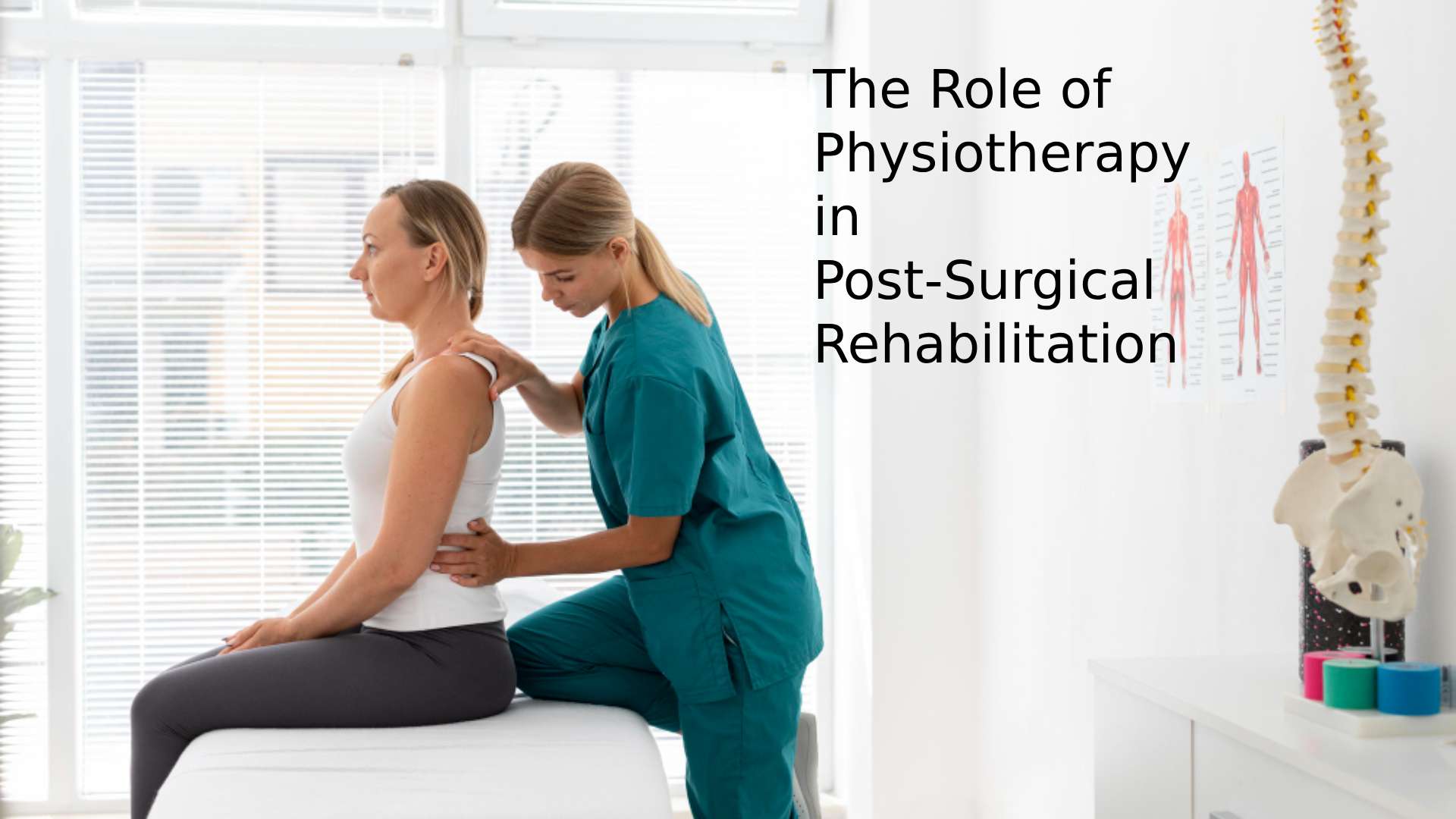
The Crucial Role of Physiotherapy in Post-Surgical Rehabilitation
Surgery is often a necessary intervention for many health conditions, but the journey to complete recovery doesn't end when you leave the operating room. Post-surgical rehabilitation plays a vital role in ensuring optimal healing, restoring function, and helping patients return to their normal activities.
Read MorePhysiotherapy for Knee Surgery: A Complete Recovery Guide
Introduction to Knee Surgery Rehabilitation Why Physiotherapy is Essential After Knee Surgery Recovering from knee surgery isn’t just about resting and waiting for your body to heal—it’s an active process that demands strategic rehabilitation. And that’s where physiotherapy becomes your best ally. W
Read More
Best Physiotherapy Exercises After Knee Surgery Recovery
Exercises that can help you recover from your knee specials can be time-consuming ensure you take the few moments needed to do them. Be it Total KNEE replacement, ACL reconstruction, or MENISCUS surgery, physiotherapy is a significant treatment in restoring mobility and strength.
Read MoreWatch: From Our Physiotherapists



Need Professional Help?
Our expert physiotherapists are here to help you recover and stay healthy.