Cervical Spondylitis Physiotherapy Treatment: Causes, Exercises and Recovery Guide
Most neck pain from cervical spondylosis improves without surgery. This guide covers red flags, how physiotherapists assess the neck, the exercises with research support, and what a 6 to 12 week recovery looks like.
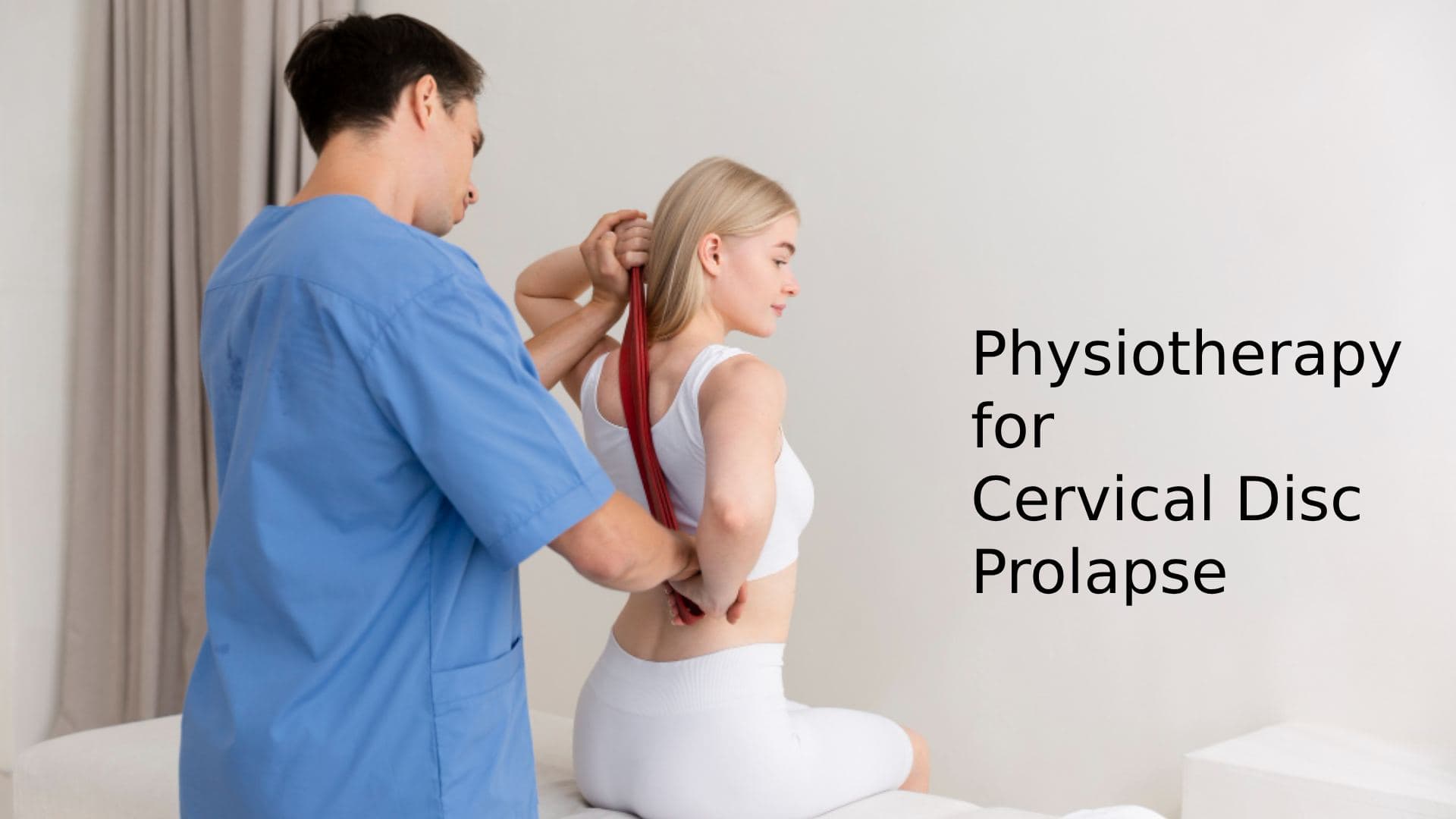
A neck that will not turn while reversing the car, a dull ache that climbs into the skull by evening, or tingling that runs down the arm at night: these are the experiences that send thousands of people to search for cervical spondylitis physiotherapy treatment every month. The good news is that most people with this condition improve without surgery. Research consistently shows that conservative care, led by physiotherapy, is the preferred first approach.
This guide explains what cervical spondylitis really is, which symptoms are harmless and which are red flags, how a physiotherapist assesses and treats the neck, which exercises have research support, and what a realistic recovery timeline looks like. It also covers how home physiotherapy works for patients in Bangalore.
Key Takeaways
- "Cervical spondylitis" is most often used to describe cervical spondylosis, the age-related wear of the neck's discs and joints. True spondylitis means inflammation and needs a different workup.
- Physiotherapy is the first-line treatment. It combines pain relief, manual therapy, targeted neck and shoulder blade strengthening, posture correction and education.
- Scan findings do not equal pain. Many people with degenerative changes on X-ray have no symptoms at all.
- Progressive arm weakness, clumsy hands, unsteady walking or bladder changes need urgent medical review before any physiotherapy.
- Most people notice meaningful improvement within a few weeks, while a full programme usually runs 6 to 12 weeks.
What Is Cervical Spondylitis? (And How It Differs From Spondylosis)
Most patients who type "cervical spondylitis" into a search bar are describing neck pain and stiffness linked to degenerative change. Clinically, that condition is called cervical spondylosis: the gradual wear of the intervertebral discs, facet joints and ligaments of the neck, often with small bony outgrowths called osteophytes. StatPearls describes it as the most prevalent degenerative condition of the cervical spine, and the C5-C6 and C6-C7 levels are the most commonly affected.
Spondylitis, in the strict medical sense, means inflammation of the vertebrae. It is seen in inflammatory conditions such as ankylosing spondylitis. This distinction matters because the treatment pathway differs. Warning signs of an inflammatory cause include:
- Morning stiffness lasting more than 30 minutes
- Pain that eases with movement and worsens with rest
- Onset before the age of 40
- Pain that wakes you in the second half of the night
A good physiotherapist screens for these patterns during the first visit and refers you to a rheumatologist when needed. If your report says "cervical spondylosis" or "degenerative changes," the rest of this guide applies directly to you.
An important reassurance: according to clinical references summarised by Patient.info and the BMJ, roughly 25% of people under 40, 50% of people over 40 and 85% of people over 60 show spondylotic change on X-ray, yet most have no symptoms. An alarming-sounding MRI report is therefore not a sentence to lifelong pain. Physiotherapy treats how your neck functions, not just how it looks on a scan.
Causes and Risk Factors
Cervical spondylosis develops through a multifactorial process in which age-related disc degeneration is the dominant driver. Several everyday factors speed it up:
- Age: discs lose water and height over the years, which loads the joints behind them.
- Prolonged forward head posture: every hour spent looking down at a phone or laptop increases the load on the lower neck. See our guide to desk job syndrome and physiotherapy for how workstation habits feed neck problems.
- Previous neck injury or whiplash: old trauma can accelerate wear at the injured level.
- Repetitive overhead work or heavy loads on the head and shoulders.
- Smoking and family history, both of which are linked to faster disc degeneration.
- Poor sleep posture: pillows that are too high or too flat keep the neck bent for hours.
Symptoms: Three Clinical Patterns
StatPearls groups the presentations of cervical spondylosis into three syndromes. Knowing which one you have helps you understand your treatment.
- Axial neck pain. Stiffness, aching and pain that worsens with movement, often with a grinding sensation. Tension headaches that start at the base of the skull are common and are often cervicogenic. Read more in our article on cervicogenic headache.
- Cervical radiculopathy. A compressed or irritated nerve root causes pain, tingling or numbness that travels into the shoulder, arm or fingers, sometimes with weakness. Pain around the shoulder blade is a frequent clue; see physiotherapy for shoulder blade pain. When the cause is a disc, our guides on cervical PIVD and cervical disc prolapse are useful companions.
- Cervical myelopathy. Compression of the spinal cord itself. This is the least common but most serious pattern, and it is covered in the next section.
Red Flags: When to See a Doctor Before Starting Physiotherapy
Most neck pain is mechanical and safe to treat with physiotherapy. A small number of presentations need medical investigation first, often an MRI. Seek prompt medical review if you notice any of the following:
- Clumsy hands, difficulty with buttons, handwriting or dropping objects
- Unsteady walking or a feeling that your legs are heavy or stiff
- Electric-shock sensations down the spine when you bend your neck (Lhermitte's sign)
- Progressive weakness in an arm or hand
- New problems with bladder or bowel control
- Unexplained weight loss, fever, or constant night pain that no position relieves
- Neck pain after significant trauma, or a first episode before age 20 or after age 55
The BMJ review of cervical spondylosis stresses that diagnosis is usually clinical, that a detailed neurological examination of the upper and lower limbs is essential, and that red flag symptoms identify the small group needing MRI and other investigations. A responsible physiotherapist will screen for these every session, not just at the first visit.
How a Physiotherapist Assesses Cervical Spondylosis
A thorough assessment usually takes 45 to 60 minutes and includes:
- History: onset, aggravating postures, arm symptoms, work set-up, sleep and previous episodes.
- Posture and movement analysis: head position, shoulder alignment, and the quality and range of neck rotation, flexion, extension and side bending.
- Neurological screen: reflexes, skin sensation and muscle power in the arms, plus signs of spinal cord involvement. Our overview of neurological physiotherapy tests explains what these checks involve.
- Provocation tests: such as Spurling's test and the distraction test, to see whether a nerve root is the pain source.
- Muscle function tests: deep neck flexor endurance and shoulder blade control, which are almost always weak in chronic neck pain.
- Outcome measures: a baseline score such as the Neck Disability Index, so that progress is measured rather than guessed.
One advantage of home assessment is that the therapist can see your actual desk, chair, bed and pillow, which are often the missing piece of the puzzle.
Cervical Spondylitis Physiotherapy Treatment: What Is Used and Why
A 2023 narrative review in Biomolecules and Biomedicine confirms that conservative treatment is the primary approach to cervical spondylosis, with rehabilitation therapy as an essential component. Treatment is staged to match how irritable the neck is.
Pain Relief and Calming the Flare
When the neck is highly irritable, the first goal is comfort. Your therapist may use heat, TENS, interferential current or therapeutic ultrasound alongside gentle positioning. These modalities do not fix the cause, but they create a window in which movement becomes possible. Learn how they differ in electrotherapy modalities in physiotherapy and TENS vs traction.
Manual Therapy
Hands-on techniques restore movement and reduce muscle guarding. Common methods include gentle joint mobilisation, soft tissue release of the upper trapezius, levator scapulae and suboccipital muscles, and mobilisation of the stiff upper back. The review above highlights muscle energy technique (MET), proprioceptive neuromuscular facilitation (PNF) and fascial manipulation as newer options that support rehabilitation of cervical spondylosis. Forceful neck cracking is not required and is not a substitute for a proper programme. Our comparison of physiotherapy vs remedial massage vs chiropractic treatment explains the differences.
Cervical Traction
Manual or mechanical traction gently separates the vertebrae and is sometimes used when arm symptoms dominate. The evidence is mixed, so traction works best as an adjunct to exercise rather than a stand-alone treatment. It is not appropriate when myelopathy is suspected.
Targeted Exercise Therapy
Exercise is the part of treatment that produces lasting change. The Cochrane review of exercises for mechanical neck disorders found moderate-quality evidence that specific strengthening of the neck, shoulder blade and shoulder region helps chronic neck pain, cervicogenic headache and cervical radiculopathy. Low-quality evidence suggests a small short-term pain benefit in acute radiculopathy. It also found that general upper-limb stretching or generic exercise programmes showed little benefit, which is why a specific, supervised programme beats a random YouTube routine.
Advanced Techniques
For stubborn cases, therapists may add sling exercise training, which uses suspended supports to train deep stabilising muscles, as well as PNF patterns and proprioceptive retraining. These are the techniques reviewed by Chen and colleagues in 2023 as promising additions to traditional care.
Education and Ergonomics
Understanding what aggravates your neck, and how to modify it, prevents the cycle of flare-ups. This includes screen height, break routines, pillow choice and lifting technique.
Physiotherapy Exercises for Cervical Spondylosis
The exercises below are those most commonly prescribed in clinical practice. Treat the repetitions as typical starting points, because your physiotherapist will adjust them to your findings. A small 10-day study from Kosovo reported that dynamic exercises improved cervical mobility more than isometric exercises, although the authors themselves called for larger, longer trials.
- Chin tuck (deep neck flexor activation): lie or sit tall, gently draw the chin straight back as if making a double chin, hold 5 seconds, repeat 10 times, 2 to 3 sets daily.
- Scapular retraction: squeeze the shoulder blades together and slightly down, hold 5 seconds, 10 repetitions. This trains the muscles Cochrane identified as important. Restoring balance between tight and weak muscle pairs is explained in our guide to agonist and antagonist muscles in physiotherapy.
- Gentle active range of motion: slowly turn the head to each side, tilt the ear toward the shoulder, and look up and down within a comfortable range, 8 to 10 repetitions each.
- Upper trapezius and levator scapulae stretch: sit tall, tilt the ear toward the shoulder, and hold for 20 to 30 seconds, 2 to 3 times per side.
- Isometric neck holds: press the palm lightly against the side of the head without moving it, hold 5 seconds. Use only when advised, and keep the effort gentle.
- Thoracic extension over a chair back or towel roll: a stiff upper back forces the neck to work harder, so mobilising it takes load off the cervical spine.
- Nerve gliding exercises: for arm symptoms from radiculopathy, taught by your therapist because technique is critical.
The golden rule: mild stretching or aching during exercise is acceptable. If arm pain, numbness or tingling spreads further down the limb, stop and tell your physiotherapist. Symptoms that move back toward the neck are generally a good sign.
Avoid during a flare: fast neck circles, forceful self-cracking, headstands and shoulder stands, heavy overhead lifting, and sleeping on several stacked pillows.
What Is a Realistic Recovery Timeline?
Few guides explain this, yet it is the question patients ask most. Every neck is different, but a typical staged plan looks like this:
- Weeks 0 to 2 (settle the flare): pain relief modalities, gentle mobility, posture education and short, frequent movement breaks.
- Weeks 2 to 6 (restore movement and control): manual therapy, deep neck flexor activation, scapular training and nerve glides if needed. Many people feel clearly better by this stage.
- Weeks 6 to 12 (build strength and endurance): progressive neck and shoulder blade strengthening, work-specific retraining and endurance holds.
- After week 12 (maintenance): a short home programme two to three times a week plus workstation habits to prevent recurrence.
Be realistic about what changes. Degenerative changes seen on imaging do not reverse, but pain, stiffness and function frequently improve substantially because the muscles and joints around the spine are retrained. One clinical overview also notes that physiotherapy works best alongside appropriate medical care rather than as an isolated fix, which is the approach we follow.
Physiotherapy vs Medication vs Surgery
- Medication, prescribed by your doctor, helps control pain during flares so you can move. It does not address weak muscles or poor posture.
- Physiotherapy targets the underlying movement and strength problems and teaches you to manage your own neck.
- Surgery is reserved for progressive myelopathy, significant neurological deficit or intractable radiculopathy that has failed conservative care. The BMJ review notes that surgical results for neck pain alone are often disappointing, which is another reason to try a structured physiotherapy programme first.
Why Home Physiotherapy Suits Cervical Spondylosis
Most guides never address this: where you receive treatment affects how well it works.
- Comfort during a flare: travelling in traffic with a stiff, painful neck often worsens symptoms.
- Ergonomic correction in your real environment: your therapist can adjust your desk, chair, laptop height and pillow on the spot.
- Safer care for seniors: our geriatric physiotherapy service avoids long travel for older adults, and our guide to physio for the elderly in Bangalore at home explains what families can expect.
- Family involvement: relatives can learn safe assisting techniques.
- Consistency: easier scheduling means fewer missed sessions, and review calls can be done through telehealth physiotherapy between visits.
If nerve involvement is significant, our neurological physiotherapy team can add specialised assessment, and our orthopaedic physiotherapy service covers the musculoskeletal side of care. Our guide to ortho and neuro physiotherapy explains how the two specialities work together.
Daily Habits That Protect Your Neck
- Raise your screen so the top third sits at eye level.
- Hold your phone at eye level instead of looking down at your lap.
- Take a 1 to 2 minute movement break every 30 to 45 minutes.
- Use one supportive pillow that keeps your neck in line with your spine.
- Avoid wearing a soft collar for long periods unless a clinician has prescribed it, since prolonged use can weaken neck muscles.
- Carry bags on alternate shoulders or use a backpack with both straps.
- Stay active with walking or swimming, and stop smoking.
Home Physiotherapy for Cervical Spondylitis in Bangalore
If you live in Bangalore, you do not need to battle traffic to the clinic with a painful neck. Physio At Your Doorstep brings qualified physiotherapists to your home across 40+ areas of the city, including Koramangala, HSR Layout, Indiranagar, JP Nagar, BTM Layout, Jayanagar, Whitefield, Marathahalli, Bellandur and Electronic City. This matters especially for software professionals along the IT corridors, where long hours at a laptop and long commutes combine to make neck problems so common.
Every plan begins with a full assessment, red flag screening and a personalised programme led by a qualified physiotherapist. Our founder, Dr. Atharva Mishra, holds a Master's in Sports Physiotherapy, and the team offers 24x7 availability, with same-day visits subject to therapist availability in your area.
Ready to start?
- Book online: Book an appointment
- Call or WhatsApp: +91 82337 87737
- Check your area: Service locations
- Questions first: Contact us
- Explore everything we treat: Our services
Frequently Asked Questions
What is the best physiotherapy treatment for cervical spondylitis?
There is no single best technique. The most effective programmes combine pain relief, manual therapy, specific strengthening of the deep neck muscles and shoulder blade stabilisers, posture correction and education. Cochrane evidence supports targeted strengthening for chronic neck pain and radiculopathy.
Can cervical spondylitis be cured permanently with physiotherapy?
Degenerative changes do not disappear, so "cure" is the wrong goal. However, pain, stiffness and function often improve substantially, and a maintenance programme reduces the chance of recurrence.
How long does physiotherapy for cervical spondylosis take?
Many patients feel clear improvement within 2 to 4 weeks, and a complete programme typically lasts 6 to 12 weeks. Longer-standing or nerve-related cases may take more time. Your therapist will track progress using measurable scores.
Is cervical spondylitis the same as cervical spondylosis?
In everyday use, people often use the terms interchangeably for neck wear and tear. Strictly, spondylosis is degenerative, while spondylitis means inflammation of the vertebrae, as in ankylosing spondylitis. A clinical assessment and, where needed, blood tests or imaging confirm which one you have.
Which exercises should I avoid with cervical spondylosis?
Avoid fast neck rolls, forceful twisting or self-cracking, headstands, shoulder stands and heavy overhead lifting, especially during a flare. Any exercise that sends numbness or pain further down the arm should be stopped.
Is traction good for cervical spondylosis?
Traction can offer short-term relief for some people with arm symptoms, but the evidence is mixed. It works best combined with exercise and is unsuitable when spinal cord compression is suspected.
Can physiotherapy help arm numbness and tingling?
Often yes, when the cause is nerve root irritation. Treatment includes posture and movement modification, mobilisation, nerve gliding and strengthening. Worsening weakness or hand clumsiness requires urgent medical evaluation.
Is home physiotherapy as effective as clinic treatment?
The core of treatment, which is assessment, manual therapy, exercise and education, can be delivered fully at home. Home visits also allow ergonomic correction in your real environment. Imaging, injections or surgical opinions still happen through your doctor.
Should I see a doctor or a physiotherapist first?
If you have red flag symptoms such as clumsy hands, balance problems, bladder changes or rapidly worsening weakness, see a doctor first. For ordinary neck pain and stiffness, with or without mild arm symptoms, a physiotherapist is an appropriate first contact and will refer you onward if needed.
Resources and Further Reading
Research and clinical references
- Chen Q, Wang Z, Zhang S. Exploring the latest advancements in physical therapy techniques for treating cervical spondylosis patients: A narrative review. Biomolecules and Biomedicine, 2023. https://pmc.ncbi.nlm.nih.gov/articles/PMC10494843
- Gross A et al. Exercises for mechanical neck disorders. Cochrane Database of Systematic Reviews, 2015. https://search.pedro.org.au/search-results/record-detail/14623
- Cervical Spondylosis. StatPearls, NCBI Bookshelf. https://www.ncbi.nlm.nih.gov/books/NBK551557/
- Binder A. Cervical spondylosis and neck pain. BMJ review, PubMed Central. https://pmc.ncbi.nlm.nih.gov/articles/PMC1819511
- Cervical spondylosis (professional reference). Patient.info. https://patient.info/doctor/orthopaedics/cervical-spondylosis-pro
- Azemi A et al. The effect of dynamic exercises in the treatment of cervical spondylosis. World Physiotherapy Congress proceedings. https://www.world.physio/congress-proceeding/effect-dynamic-exercises-treatment-cervical-spondylosis
From Physio At Your Doorstep
- Orthopaedic physiotherapy service
- Cervical PIVD physiotherapy treatment
- Cervicogenic headache guide
- Torticollis physiotherapy treatment
- Lumbar spondylosis physiotherapy
- Desk job syndrome and physiotherapy
- All blog articles
Medical disclaimer: this article is for educational purposes and does not replace personalised medical advice. If you have red flag symptoms, consult a doctor promptly.
Related Service
Orthopaedic Physiotherapy at Home
Book a certified physiotherapist for orthopaedic physiotherapy across Bangalore & Pune.
Related Articles
Disc Bulge Physiotherapy Treatment for L3, L4, L5: A Complete Recovery Guide
Disc bulges at L3-L4, L4-L5, and L5-S1 are extremely common, and most respond well to conservative care. Here is what each level means, how physiotherapists treat them differently, and what a realistic recovery timeline looks like.
Read More
Schmorl’s Node Physiotherapy Management: Rehab Guide
If you have been diagnosed with a Schmorl’s node or discovered one incidentally on a spinal MRI, you may have walked away with more questions than answers. What exactly is this condition?
Read More
Physiotherapy for Wrist Drop: Radial Nerve Care Guide
Waking up one morning and finding that you cannot lift your wrist or extend your fingers is understandably alarming. This condition, commonly known as wrist drop, is one of the most recognizable signs of radial nerve palsy.
Read MoreNeed Professional Help?
Our expert physiotherapists are here to help you recover and stay healthy.